Richten Energy Turns Taiwan’s Façade Solar Validation into a Gateway for Taiwan–Japan GX Collaboration
Richten Energy 0
Taiwan’s net-zero building solution makes its Tokyo debut
Jin Media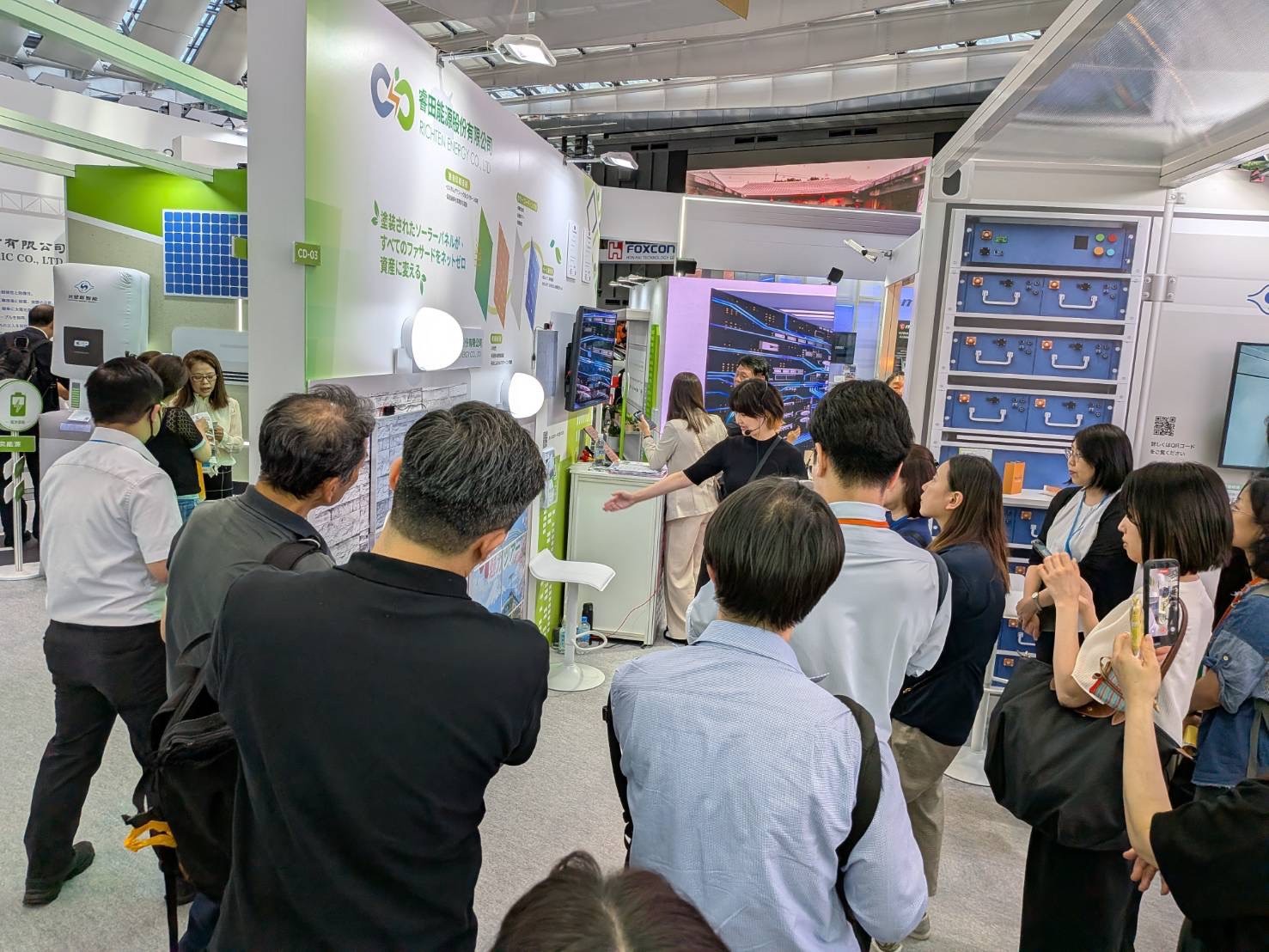
Richten Energy Co., Ltd. made its official appearance today at the Energy & Circular Economy GX Pavilion at the 2026 Taiwan Expo in Japan, showcasing its coloured solar façade technology designed to transform building exteriors into power-generating assets.
Through physical modules, layered system structures, building application cases and the results of its Phase II national coloured solar façade demonstration project conducted with the Architecture and Building Research Institute (ABRI), Ministry of the Interior, Richten presented a new net-zero building proposition to Japan’s construction, energy and property sectors: beyond rooftops, urban façades can generate electricity too.
The 2026 Taiwan Expo in Japan was held from 15 to 17 July at Shinjuku Sumitomo Building Sankaku Hiroba in Tokyo. Centred on Taiwan–Japan co-innovation, the exhibition brought together industries spanning energy and the circular economy, smart cities and technologies, AI-enabled manufacturing and healthcare. Taiwan’s Ministry of Economic Affairs said the event was organised around the theme “Innovate for Tomorrow”, with the aim of deepening next-generation industrial collaboration between Taiwan and Japan. 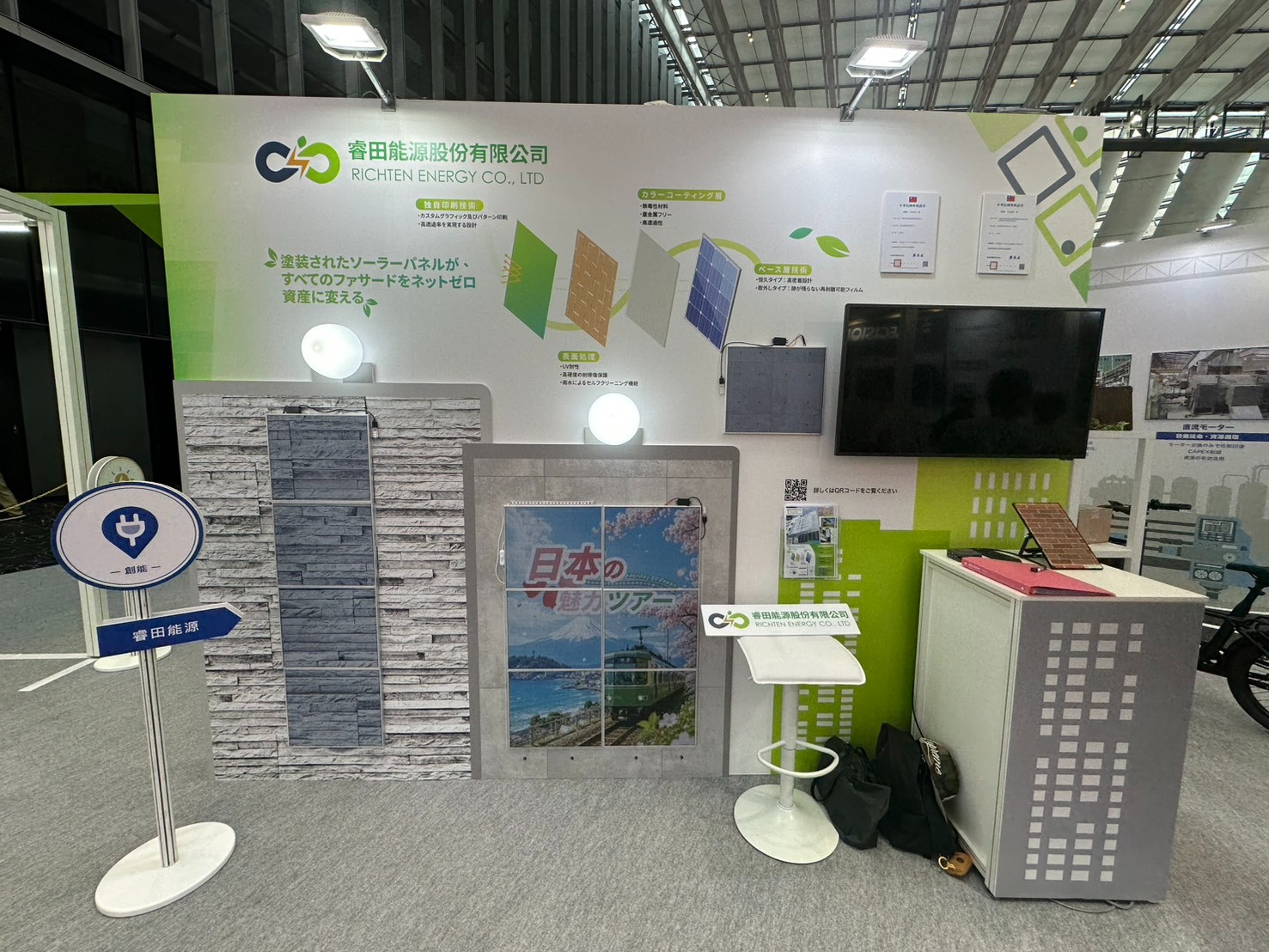
Exhibiting within the Energy & Circular Economy GX section, Richten Energy brought Taiwan’s practical experience in coloured solar technology, building-envelope applications and urban decarbonisation into the Japanese market.
At the core of Richten Energy’s technology is the ability to add power generation, brand communication and energy-data value to building façades while preserving architectural appearance, colour and graphic design.
For high-density cities, where rooftop area, equipment space and visual constraints can limit conventional solar deployment, vertical façades could become an important additional surface for expanding renewable energy generation from buildings.
Richten Energy has previously validated its coloured solar façade technology at a national-level demonstration site operated by the Architecture and Building Research Institute. ABRI is Taiwan’s national building research agency under the Ministry of the Interior and is responsible for building technology, energy conservation, construction safety and related research and policy development.
In May 2026, David Toland, Lieutenant Governor of Kansas and Secretary of Commerce, led a Kansas government and business delegation to visit the demonstration site and signed a memorandum of understanding with Richten Energy. Kansas Department of Commerce materials confirm Toland’s official title as Lieutenant Governor & Secretary of Commerce.
Relevant government representatives have also highlighted the wider policy direction that buildings should evolve beyond being passive energy consumers and increasingly become energy producers and contributors to urban resilience. Through demonstration, commercialisation and international partnerships, start-ups can provide a model for exporting Taiwan’s net-zero technologies and solutions.
The founder and chief executive of Richten Energy said:
“We are not simply attaching a solar panel to a building. We are giving the façade design, power-generation and data value at the same time. The demonstration environment provided by the Architecture and Building Research Institute has given Taiwanese technology credibility in the real world, while the international platforms created by the Ministry of Economic Affairs and TAITRA give these results an opportunity to move from demonstration projects in Taiwan to cities around the world.”
During the Tokyo exhibition, Richten Energy is seeking to engage with Japanese partners across building materials, curtain-wall systems, construction, property development, energy services and urban governance, with the aim of pursuing joint demonstrations, local installation validation and market deployment.
The company stressed that its strategy for entering Japan is not based on one-way product sales. Instead, it intends to work with Japanese industry partners to jointly address safety, weather resistance, installation, operation and maintenance, and compliance with Japanese building regulations, creating a Taiwan–Japan GX collaboration model that can be replicated over the long term.
For Richten Energy, the Tokyo exhibition therefore represents more than a product showcase. It provides an opportunity to convert Taiwan’s national-level validation into a practical entry point for Taiwan–Japan green transformation, or GX, collaboration, while bringing a Taiwanese net-zero building solution into one of Asia’s most demanding construction and property markets.
Source: Minsheng E-News
(The share action will open in a new window.)