New Rooftop Solar Rules Take Effect in 2026: PV Mandatory for New Buildings Over 1,000 sq m, While Residential and Everyday-Service Buildings Temporarily Exempt
Richten Energy 436
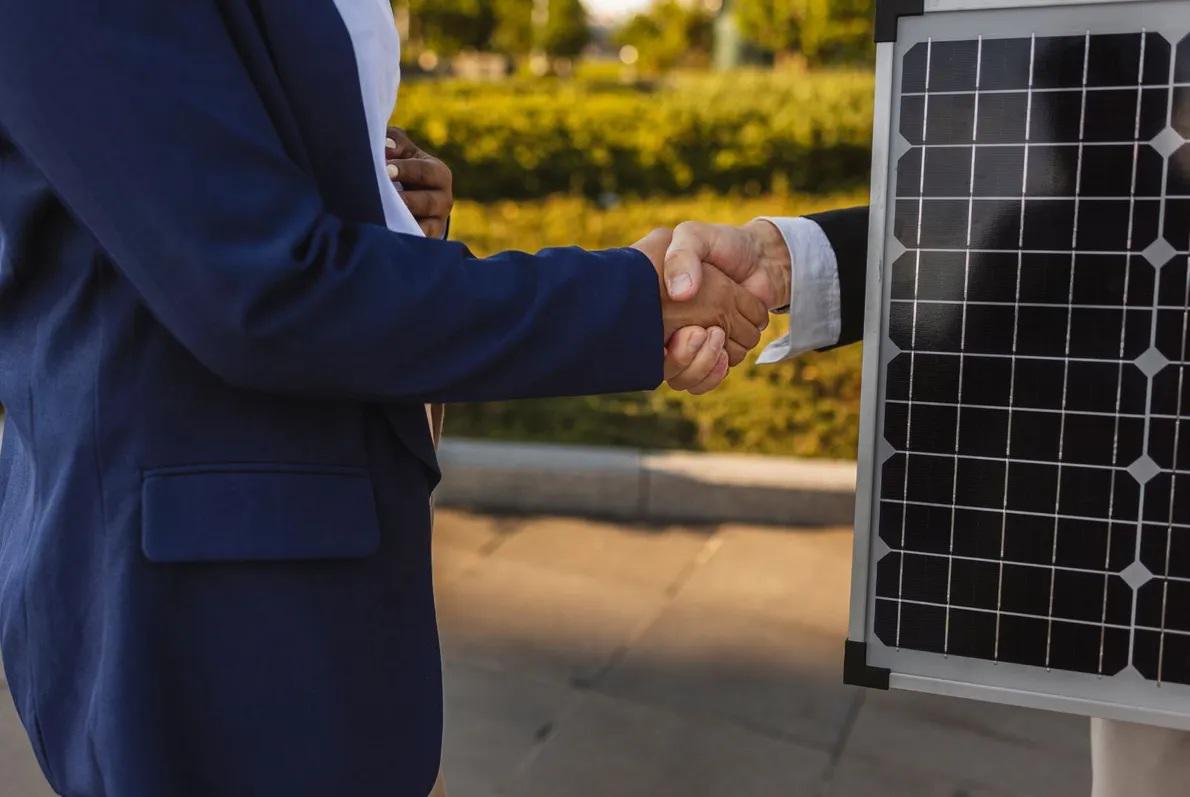
In August 2026, the Standards for the Installation of Solar Photovoltaic Power Generation Equipment on Buildings, jointly issued by Taiwan’s Ministry of the Interior (MOI) and Ministry of Economic Affairs (MOEA), came into force.
Under the new rules, newly constructed, extended or reconstructed buildings with a building area of 1,000 square metres or more are required to install a prescribed capacity of solar photovoltaic (PV) generation equipment. What benefits and challenges could the new policy bring to Taiwan’s energy transition, and which types of buildings will be affected?
The standards, jointly issued by the MOI and MOEA, took effect this month. They require new buildings, extensions and reconstructed buildings meeting the 1,000-square-metre threshold to install solar PV systems. The new policy is expected to add around 660 MW of solar PV capacity each year — enough to meet the annual electricity demand of approximately 200,000 households.
The official regulations specify that qualifying buildings must install 1 kW of solar PV capacity for every 20 square metres of applicable building or roof area.
However, the policy was adjusted shortly before implementation. Taking into account the complexities of residential property transfers, the additional costs involved in urban renewal projects and potential disputes over the subsequent operation and maintenance of jointly owned systems, the MOI and MOEA decided to temporarily defer implementation for Category H buildings (residential) and Category G-3 buildings, including clinics, pharmacies and premises providing everyday services.
For the time being, implementation will therefore focus primarily on factories, shopping centres and public buildings with simpler or single ownership structures.
What, then, can the new rules contribute to Taiwan’s energy transition, and what challenges might they face? Science Media Center Taiwan (SMC) has brought together expert views to examine the implications of the policy.
Which types of buildings are covered, and which may qualify for exemptions?
The new rules apply to buildings with a building area of at least 1,000 square metres falling within Categories A, B, C, D and F, as well as certain Category G buildings, as defined under Taiwan’s Building Technical Regulations. These include:
Public assembly and educational facilities: cinemas, sports arenas, railway stations, gyms, libraries and large school buildings.
Commercial and consumer facilities: karaoke venues, department stores, restaurants and hotels.
Administrative and office premises: banks and commercial office buildings.
Factories and storage facilities: factories, vehicle repair workshops and warehouses.
Healthcare and care facilities: large hospitals, long-term care institutions and kindergartens.
Buildings that meet the threshold may nevertheless apply to the competent authority for a reduction in, or exemption from, the installation requirement where supporting documentation or simulation assessments demonstrate special circumstances. These include:
Insufficient sunlight or significant shading: where professional modelling shows that surrounding buildings cause substantial shading or otherwise result in poor solar exposure.
Special structural conditions: where the roof structure — such as a dome, unusually shaped roof or a structure with insufficient load-bearing capacity — cannot safely support PV equipment.
Special building uses: where the building’s function conflicts with the installation of a PV system or presents particular safety concerns, such as certain heritage restoration projects or facilities storing hazardous materials.
The official regulations define the 1,000-square-metre threshold separately for new construction, extensions and reconstruction projects.
Who owns the system, and are there restrictions on how the electricity is used?
Article 8 of the Standards for the Installation of Solar Photovoltaic Power Generation Equipment on Buildings stipulates that, before ownership of a building equipped with solar PV under the standards is transferred, or before the property is handed over pursuant to the Condominium Administration Act Building Administration Division, the original building constructor must change the registered owner of the renewable-energy generation equipment to the building owner, management committee, responsible manager or another person holding management authority.
In practical terms, once a developer completes a building and installs the solar panels, ownership of the PV equipment must also be transferred before the property or common areas are formally handed over. Responsibility for maintaining the equipment, along with any revenue generated from electricity sales, then passes to the property owner or management committee.
Are there restrictions on how the electricity generated may be used?
Under the standards, Article 6, Paragraph 2 requires the electrical system to be designed so that electricity generated by the PV system can be used on site during a power outage. Beyond this requirement, however, the regulations do not prescribe how electricity generated under normal operating conditions must be used.
The owner may therefore decide whether to sell all electricity generated under the applicable feed-in arrangement, use it to offset electricity consumed by communal facilities, or adopt another permitted arrangement.
What does the new policy mean for Taiwan’s energy transition?
Le-Ren Chang-Chien, Professor in the Department of Electrical Engineering at National Cheng Kung University, said rooftop solar represents a way for electricity users to share responsibility for the energy transition. If combined with energy-storage systems, rooftop PV could also form household-scale microgrids capable of operating independently from the grid, maintaining essential electricity supplies during natural disasters or power outages and strengthening energy resilience. His official university profile lists his English name as Le-Ren Chang-Chien and his position as Professor in the Department of Electrical Engineering.
Jen-Yu Han, Professor in the Department of Civil Engineering at National Taiwan University, noted that Taiwan has limited land and a high population density, meaning ground-mounted solar projects can compete with other forms of land use. Rooftop solar, by contrast, allows buildings to serve both their original purpose and as electricity-generation assets without requiring additional land development, making it a relatively low-impact form of renewable energy particularly suited to Taiwan.
Han said the new requirement for building power systems to support self-consumption during outages could help improve community energy independence. Ideally, buildings should remain connected to the Taiwan Power Company grid under normal conditions and switch to off-grid operation during emergencies, balancing energy resilience with electricity-supply efficiency. Although such systems entail higher installation costs, he argued that they should not be assessed solely in terms of cost-effectiveness.
Chin-Huai Young, Distinguished Professor in the Department of Civil and Construction Engineering at National Taiwan University of Science and Technology, said that if rooftop solar can achieve the principle of “generating electricity locally and consuming it locally”, it can shorten the distance between electricity generation and consumption, reduce transmission losses, improve energy efficiency and ease pressure on the transmission and distribution system, thereby strengthening urban energy resilience.
Chan-Nan Lu, Professor in the Department of Electrical Engineering at National Sun Yat-sen University, said the broader significance of the new rules lies in promoting greater regional equity in energy production and a shared social responsibility for the energy transition. NSYSU’s official English faculty listing identifies him as Chan-Nan Lu, Professor and IEEE Fellow, specialising in areas including power systems, distributed generation and smart grids.
Lu argued that the burden of hosting electricity-generation infrastructure should not fall disproportionately on central and southern Taiwan while electricity is consumed elsewhere. All electricity users should participate in the energy transition. Distributed rooftop solar based on “local generation and local consumption” can reduce long-distance electricity transmission and line losses while easing the generation burden on central and southern Taiwan.
Lu further noted that Taiwan’s current nationwide uniform electricity pricing system helps maintain stability for households but does not fully reflect transmission losses, grid congestion and environmental costs associated with transporting electricity over long distances. In future, he suggested, Taiwan could consider locational electricity pricing for large electricity users and AI data centres.
Although integrating microgrids would increase installation and management costs, he said such systems could improve community energy resilience in the face of climate change and extreme disasters.
Will the new rules significantly increase Taiwan’s solar capacity?
Ming-Chih Kao, Professor at the Institute of Law for Science and Technology at National Tsing Hua University, believes the new rules may have only a limited effect on Taiwan’s overall rooftop solar capacity.
He noted that Taiwan has already encouraged rooftop solar installations through relatively generous feed-in tariffs, meaning many property owners with suitable conditions and a willingness to install solar systems have already done so.
Moreover, the new rules set the threshold at 1,000 square metres. This is substantially higher than the 50-square-metre threshold under Berlin’s Solar Act, which was among the references considered during the legislative process.
Combined with Taiwan’s declining birth rate and a housing market increasingly geared towards small and medium-sized properties, the number of future developments falling within the scope of the regulations could be lower than initially estimated. As a result, the additional solar capacity generated by the policy may fall short of expectations.
Rong-Tsung Wei, Distinguished Professor in the Department of Electronic and Computer Engineering at National Taiwan University of Science and Technology, takes a different view. Although the electricity generated by any individual building may be limited, integrating tens of thousands of buildings could create a distributed power plant of considerable scale.
Much like an “army of ants”, every rooftop can serve as a small generating unit, with their cumulative contribution eventually producing substantial benefits. The policy should therefore not be assessed solely on the generation capacity of individual buildings, he argued, but rather on its long-term cumulative effect across the wider urban energy system.
Chang-Chien similarly noted that rooftop solar in northern Taiwan is often criticised because of the region’s lower levels of sunshine. However, high-efficiency PV systems can still make a meaningful contribution to a building’s electricity self-sufficiency and peak-power requirements.
He pointed out that European markets have increasingly incorporated building energy efficiency into property valuations, with more energy-efficient buildings generally commanding higher market values. Rooftop solar can therefore contribute not only to energy efficiency and self-sufficiency but also to the overall value of a property.
Combining public-law obligations with economic incentives could raise constitutional concerns
Kao argued that, beyond questions of implementation and policy design, mandatory rooftop solar requirements could also raise constitutional concerns.
He noted that the rules require only new buildings above a certain size to install PV equipment while leaving larger existing buildings outside the mandate. The resulting obligation therefore falls on particular developers and property owners, raising questions over whether the distinction is reasonable.
He also argued that significant matters affecting citizens’ rights and obligations should comply with the principle of statutory reservation and be clearly established by law, rather than being left to broadly delegated administrative discretion.
In other words, the authorities are imposing a public-law obligation requiring the installation of equipment while simultaneously offering economic incentives through mechanisms such as feed-in tariffs and renewable energy certificates. This combines administrative measures that restrict the exercise of property rights with measures that confer economic benefits, leaving constitutional questions that may ultimately require further clarification by Taiwan’s Constitutional Court.
Another issue is that factories, which were not initially the primary focus of the policy debate, ultimately became subject to the regulations. Early public discussion of the amendments centred largely on the rooftops of ordinary residential buildings, but the final scope covers a substantial number of factories. As a result, some of the stakeholders most directly affected may not have had sufficient opportunity to participate in the policy debate.
Kao argued that the fundamental purpose of small-scale rooftop solar should be self-generation and self-consumption, rather than making profits from electricity sales.
He noted that the principal incentive behind rooftop solar policies in Europe and the United States is to allow consumers to reduce the amount of electricity they purchase by generating and consuming their own power, while simultaneously easing pressure on the grid. Utilities can then pass some of the resulting savings back to consumers, creating a positive cycle.
Taiwan’s new system, by contrast, mandates installation without specifying how the electricity must be used, while existing feed-in tariffs remain comparatively attractive. This could encourage luxury residential developments and businesses that might otherwise have had little interest in installing solar systems to enter the electricity-generation market primarily because of the financial incentives.
Kao questioned whether such a policy is equitable if the cost of those incentives is ultimately borne collectively by electricity consumers.
Source: CSR@天下
(The share action will open in a new window.)