Subsidy Scheme for Renovation of Ageing Buildings Announced, with Applications to Open Nationwide by End of May 2026; NT$5 Billion Special Budget to Benefit 3,000 Older Buildings
Richten Energy 101
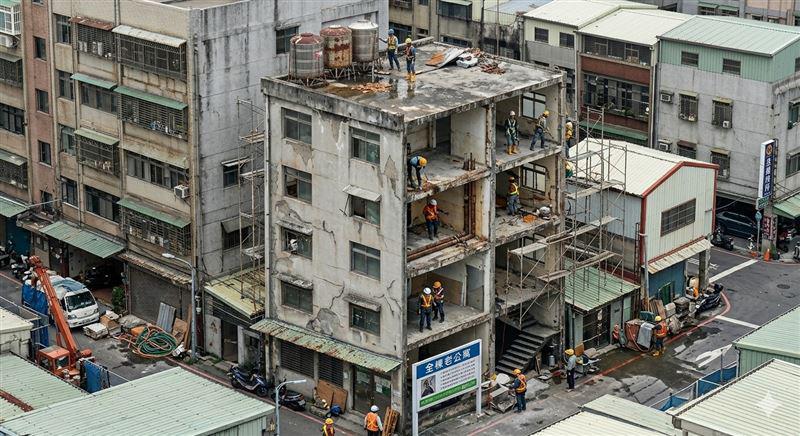
The Ministry of the Interior (MOI) said on 2 April that the National Land Management Agency (NLMA) had presented a report at the ministry’s executive meeting on the release of subsidy regulations and follow-up measures under the Ageing Building Life Extension Programme.
Minister of the Interior Liu Shyh-fang said the regulations were issued on the same day, with sample application documents expected to be made available for public reference in early May. Local governments are expected to begin accepting applications by the end of May.
An estimated 3,000 buildings nationwide are expected to benefit, covering four- to six-storey apartment buildings and houses of up to six storeys that are more than 30 years old. The Executive Yuan has also agreed to fully subsidise the cost of establishing local government service teams. In principle, major construction materials used under the programme must be domestically produced brands, a measure expected to support local industries while responding to demand for safer, more stable homes that enable people to age in place, and contributing to Taiwan’s goal of achieving net-zero emissions by 2050.
The MOI said the Executive Yuan approved the Ageing Building Life Extension and Functional Renewal Programme on 16 March 2026, allocating a special budget of NT$5 billion to improve residential safety. The programme will run until 31 December 2027. Local governments will be required to share the cost of renovation subsidies according to their respective financial capacity, working with the central government to broaden the overall impact of the programme.
Under the subsidy regulations, applicants must first apply for a structural safety performance assessment of the building before submitting a subsidy application. The programme prioritises improvements to outdoor communal areas, which may be combined with upgrades to interior facilities to enhance residential safety and functionality.
Eligible outdoor and communal-area improvements include the installation of lifts, building façade repairs, removal of ageing or illegal signs and unauthorised structures, safety improvements to externally mounted air-conditioning units and associated pipework, staircase repairs, repair and replacement of communal utility pipes, roof waterproofing and thermal insulation, and the installation or improvement of accessible facilities.
Eligible indoor safety improvements include replacing or installing handrails, improving slip resistance, addressing changes in floor level and door access, installing fall-prevention measures, and repairing water supply and drainage systems as well as electrical and gas pipes. Residents may select the improvements that best meet their individual housing needs.
In terms of subsidy levels, the MOI said funding for outdoor communal areas includes up to NT$4 million for the installation of lifts and up to NT$3 million for building façade repairs, while subsidies for other eligible items range from NT$400,000 to NT$500,000.
For indoor safety improvements, the subsidy is capped at NT$200,000 per household. Where a household includes a resident aged 65 or above or a member of a disadvantaged group, the maximum subsidy may be increased to NT$300,000 per household, helping older residents and their families live more safely and conveniently.
The programme is also being coordinated with other government initiatives, including the Ministry of Economic Affairs’ Household Rooftop Solar PV Acceleration Programme and Residential Appliance Replacement Energy-Saving Subsidy Programme, as well as the Ministry of Health and Welfare’s Assistive Devices and Home Safety and Accessibility Improvement Services. Together, these measures are intended to comprehensively improve both the physical infrastructure and facilities of residential environments, in line with Taiwan’s sustainable development goals for energy conservation and low-carbon communities.
The MOI said it had already held 17 policy briefings on the Ageing Building Life Extension Programme across Taiwan, with the next session scheduled to take place in Keelung City on Sunday, 26 April.
People interested in applying may call the consultation hotline on (02) 7701-9919 or visit the Ageing Building Life Extension section of the Urban Renewal Portal for further information.
Urban Renewal Portal – Ageing Building Life Extension section
Source: Ministry of the Interior
(The share action will open in a new window.)