Façade Project at the Architecture and Building Research Institute, Ministry of the Interior
Richten Energy 614
Taiwan’s first full-color solar PV façade was officially unveiled on December 6 at the “Public Existing Buildings Net-Zero Building Innovation Demonstration and Promotion Event” hosted by the Architecture and Building Research Institute, or ABRI, under Taiwan’s Ministry of the Interior.
The façade combines Richten Energy’s innovative colored solar PV technology with the use of recycled solar panels, demonstrating a practical application of near-zero-carbon building materials while advancing circular economy principles. The project highlights Taiwan’s advanced technologies and practical achievements in promoting net-zero buildings.
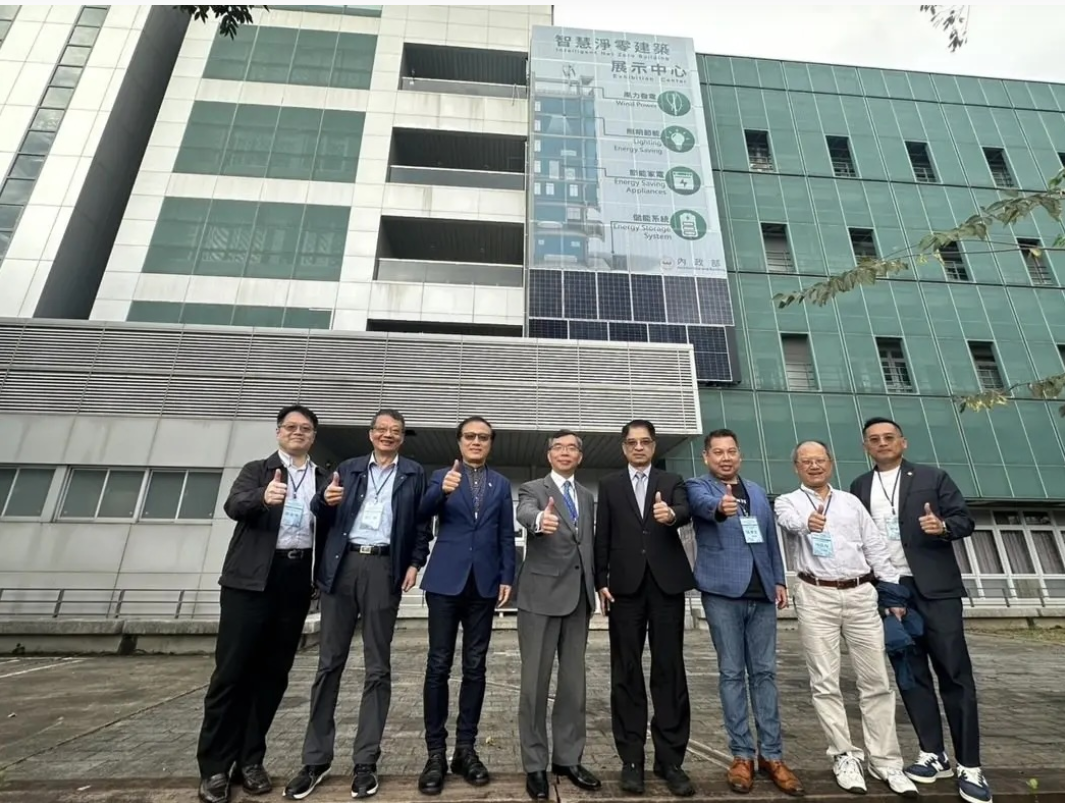
Dr. Ku-Tao Lin, a researcher at the Architecture and Building Research Institute, said that to help achieve Taiwan’s 2050 net-zero building target, ABRI has taken the lead by carrying out a net-zero transformation of an existing public building at its Materials Testing Center. Last month, the center obtained the Grade 1+ Near-Zero-Carbon Building Label for building energy efficiency. By beginning with its own public existing building, ABRI hopes to encourage privately owned existing buildings to follow the same path, working through public-private collaboration to achieve Taiwan’s net-zero goals.
For this project, the center applied a range of technologies covering energy conservation, renewable energy generation, energy storage, and energy management. These solutions were implemented not only to improve building performance, but also to reduce energy consumption and support the net-zero transformation of existing buildings. Looking ahead, ABRI will continue introducing mature and practical technologies for demonstration, providing a reference model for existing buildings seeking to transition toward net-zero performance.
Jen-Te Chien, Manager at the Material and Chemical Research Laboratories of the Industrial Technology Research Institute, which was responsible for implementing the project, said the launch of the full-color solar PV façade marks a new milestone for Taiwan’s net-zero building technologies. By integrating innovative solar PV technology with recycled material applications, the project successfully created a building façade that is both aesthetically appealing and capable of high-efficiency power generation. At the same time, the technology responds effectively to international and domestic expectations for ESG performance and circular economy development, adding a strong highlight to Taiwan’s policy implementation.
Chien further emphasized that the technology not only performs well in reducing carbon emissions, but can also continuously provide green renewable energy. In the future, it may also create additional value through carbon credit trading, making it a highly attractive solution for both public buildings and corporate facilities. He expressed hope that this demonstration project will encourage more buildings to adopt green energy applications.
Chi-Chin Lin, Director of the New Taipei City Architects Association, noted that under the global 2050 net-zero emissions target, buildings today often rely on passive energy-saving and carbon-reduction methods to lower energy use. However, active energy-generating and carbon-reduction approaches remain relatively limited in architectural applications. At present, renewable energy generation is still mostly added through relatively small rooftop solar PV systems, which provides only limited support for net-zero building goals.
Lin said that the newly installed vertical solar PV façade at ABRI’s Materials Testing Center demonstrates a feasible direction for Taiwan’s future development of energy-generating building materials. By deploying solar PV panels on building façades, buildings can increase their renewable energy generation capacity. This not only helps actively reduce energy consumption and achieve net-zero building targets, but may also enable access to carbon credit-related benefits.
He added that colored solar PV technology can help reduce resistance to the use of solar panels in architectural design. By offering more visual flexibility, colored solar PV panels allow architects greater design freedom and make it easier for solar PV systems to coordinate with the overall appearance of a building. He believes the technology has the potential to become a new generation of energy-generating, carbon-reducing building material.
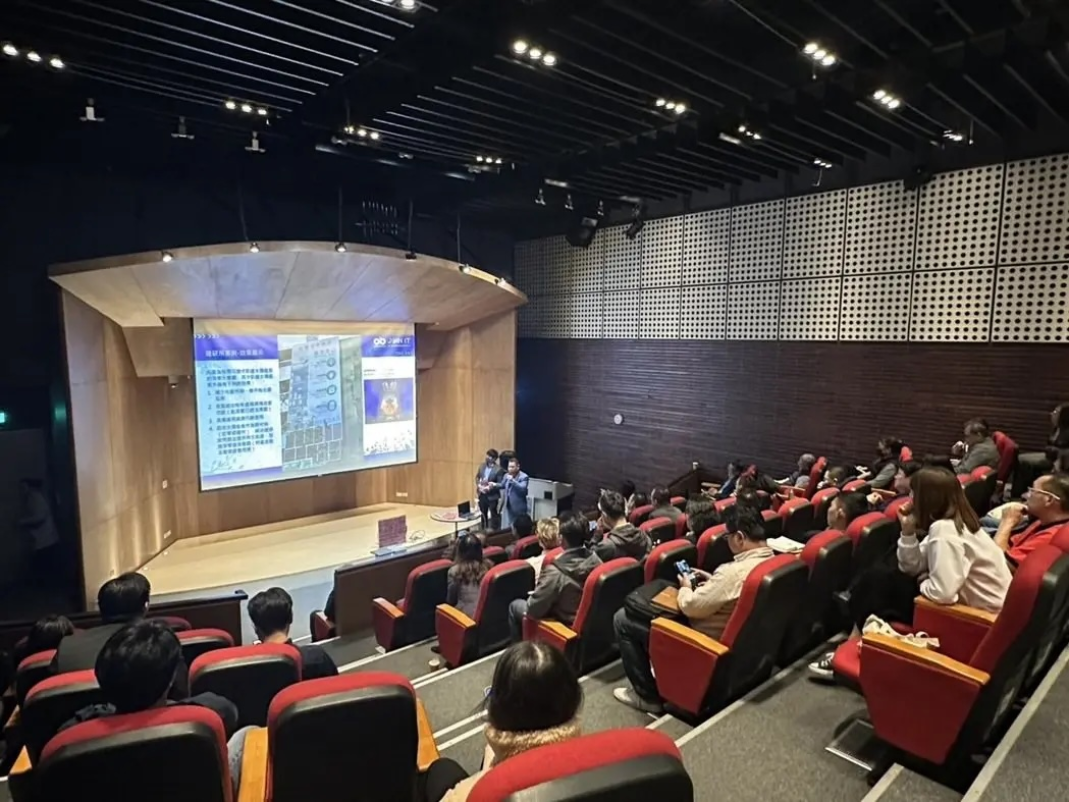
As the technology provider for the project, Weili Hsueh, CEO of Richten Energy Co., Ltd., also shared the significance of the technology application during the event.
“The full-color solar PV façade is not only a technological breakthrough, but also an important demonstration case,” Hsueh said. “Through our colored solar PV technology, we are transforming discarded solar panels into net-zero-carbon building materials, proving the feasibility of recycling and reuse. This helps address the issue of embodied carbon generated during building construction. At the same time, the recycled colored solar PV façade can continue to provide renewable energy, offering an effective response to operational carbon, which is one of the largest sources of carbon emissions in the building sector. This fully demonstrates the enormous potential of building façades as energy-generating surfaces.”
Hsueh emphasized that the successful application of this technology reflects the core spirit of the circular economy while enabling buildings to shift from being energy consumers to energy providers.
“Our coating layer includes self-cleaning functionality, which also responds to the growing importance of regular solar panel maintenance requirements established by Taiwan’s Energy Administration under the Ministry of Economic Affairs in October,” Hsueh said. “The design of the colored solar PV coating also helps reduce glare and light pollution, allowing buildings to become green landmarks within the city. Moving forward, we will continue promoting this technology and connecting it with international carbon credit mechanisms to maximize its long-term sustainability value.”
From aesthetics to performance, the full-color solar PV façade brings together several innovative applications:
Architectural value:
The façade combines design aesthetics with renewable energy generation, allowing architectural appearance and green energy to work together.
Circular economy implementation:
The project uses recycled solar panels as part of the base material to create near-zero-carbon building materials. It puts lifecycle reuse of building materials into practice while continuing to generate renewable energy.
ESG contribution:
The solution supports international ESG expectations and helps companies and public-sector organizations achieve sustainability goals.
Carbon credit potential and applications:
Surplus energy generated by the system may be further linked to carbon credit applications, creating additional economic value.
Environmentally friendly solution:
The technology helps reduce glare and light pollution, while its self-cleaning function lowers environmental impact and maintenance needs.
The Architecture and Building Research Institute said the colored solar PV façade will serve as an important promotional case for Taiwan’s future green building development. Combined with carbon credit trading and policy guidance, the project is expected to attract greater participation from companies and public-interest organizations.
Through comprehensive technology demonstration and media outreach, ABRI hopes this technology will accelerate the green transformation of more existing buildings and help Taiwan take a key step toward achieving its net-zero emissions target.
The successful launch of the project not only allowed attendees to experience the appeal of the technology firsthand, but also drew strong attention from industry representatives and government officials, creating new possibilities for Taiwan’s building and green energy industries.
(The share action will open in a new window.)