Maanshan Nuclear Power Plant Unit 2 to Shut Down, with Solar Set to Become Main Replacement Power Source over Next Four Years
Richten Energy 107
Maanshan Nuclear Power Plant to Cease Operations on 17 May 2025, Making Taiwan Asia's First Nuclear-Free Country
If Taiwan is to continue reducing its overall carbon emissions without adding new thermal power generation capacity — including coal-fired, gas-fired and oil-fired units — the only major sources of electricity generation still capable of expanding over the next five years will be offshore wind and solar power.
However, following the third phase of offshore wind zonal development, there are few suitable offshore sites remaining around Taiwan for further large-scale development, meaning that the scope for continued growth will be limited. This leaves solar power as the renewable energy source with the greatest potential for substantial expansion and for replacing thermal power generation.
Although the American Institute in Taiwan (AIT) has recently suggested that Taiwan could consider new nuclear technologies such as small modular reactors (SMRs), their deployment would first have to overcome a series of hurdles, including legislative amendments, administrative procedures, site selection and construction. Solar power is therefore the energy source best positioned to replace conventional high-carbon thermal power generation before 2030.
According to plans by the Energy Administration, Ministry of Economic Affairs, Taiwan's installed solar photovoltaic capacity is expected to increase from 12,418 MW in 2023 to 28,108 MW in 2029, representing the largest increase in generating capacity among all power sources over the period. Installed wind power capacity, meanwhile, is projected to rise from 2,674 MW to 11,538 MW over the same period and continue expanding through 2030, when Taiwan aims for renewable energy to account for 30% of its electricity generation.
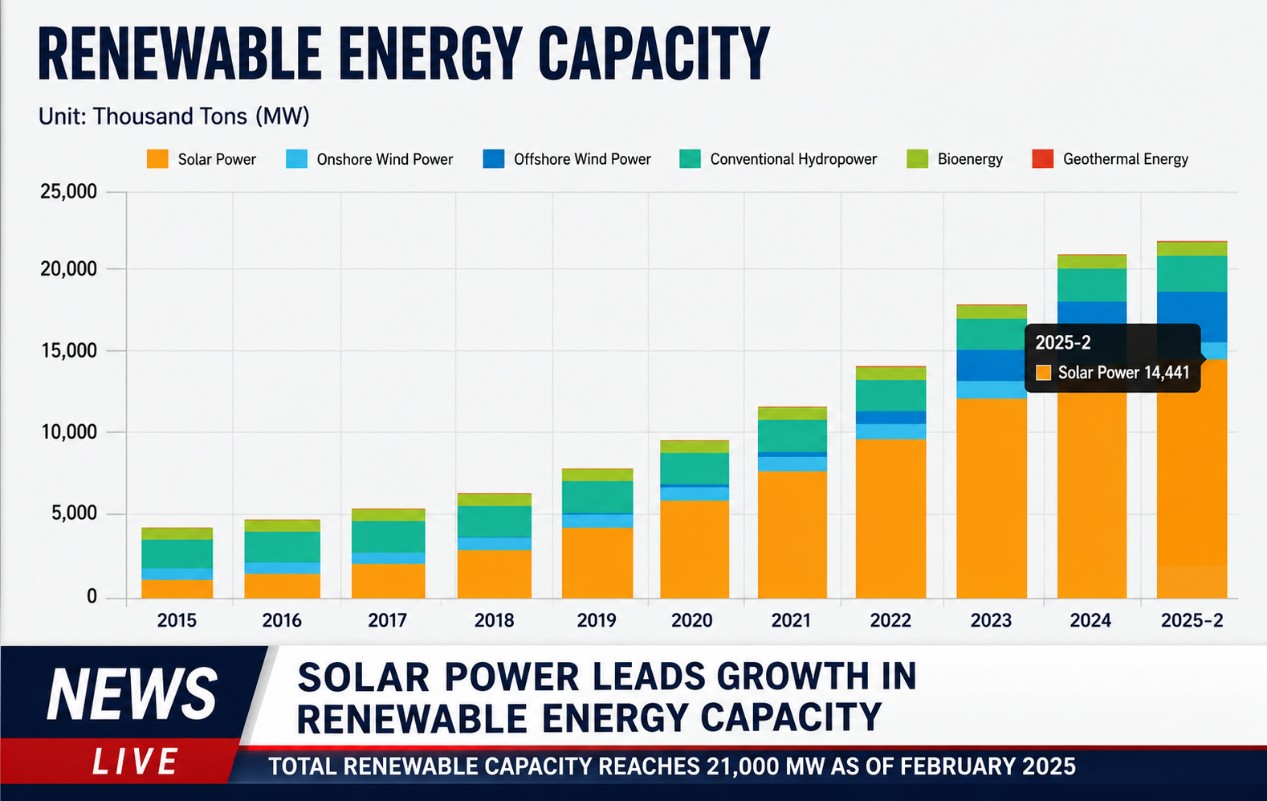
News source: Yahoo News
(The share action will open in a new window.)