From Government Validation to Global Markets: Richten Energy Emerges as a Model for Taiwan’s Net-Zero Building Technology
Richten Energy 67
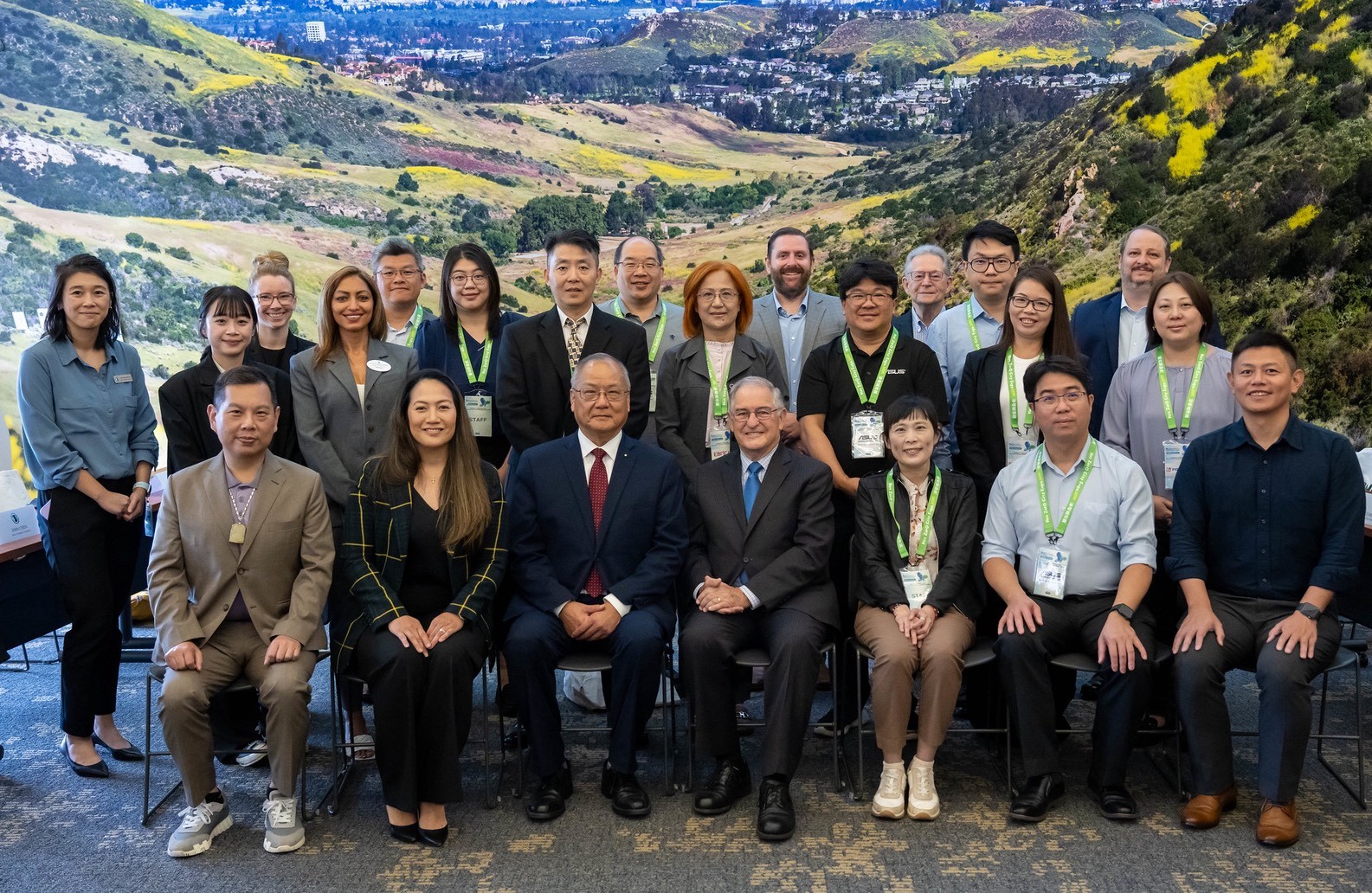
Richten Energy joined Taiwan’s Smart City West Coast delegation in Los Angeles, discussing public buildings, urban infrastructure and net-zero energy with city officials, while advancing Taiwan-validated technologies into international urban markets.
As Taiwan introduces new solar requirements for buildings and demand grows for the net-zero transition of existing properties, coloured solar façade specialist Richten Energy is expanding beyond government-building demonstration projects at home to pursue opportunities with US cities and in Japan. Its progress offers a clear example of how government-backed innovation can move from real-world validation to international markets.
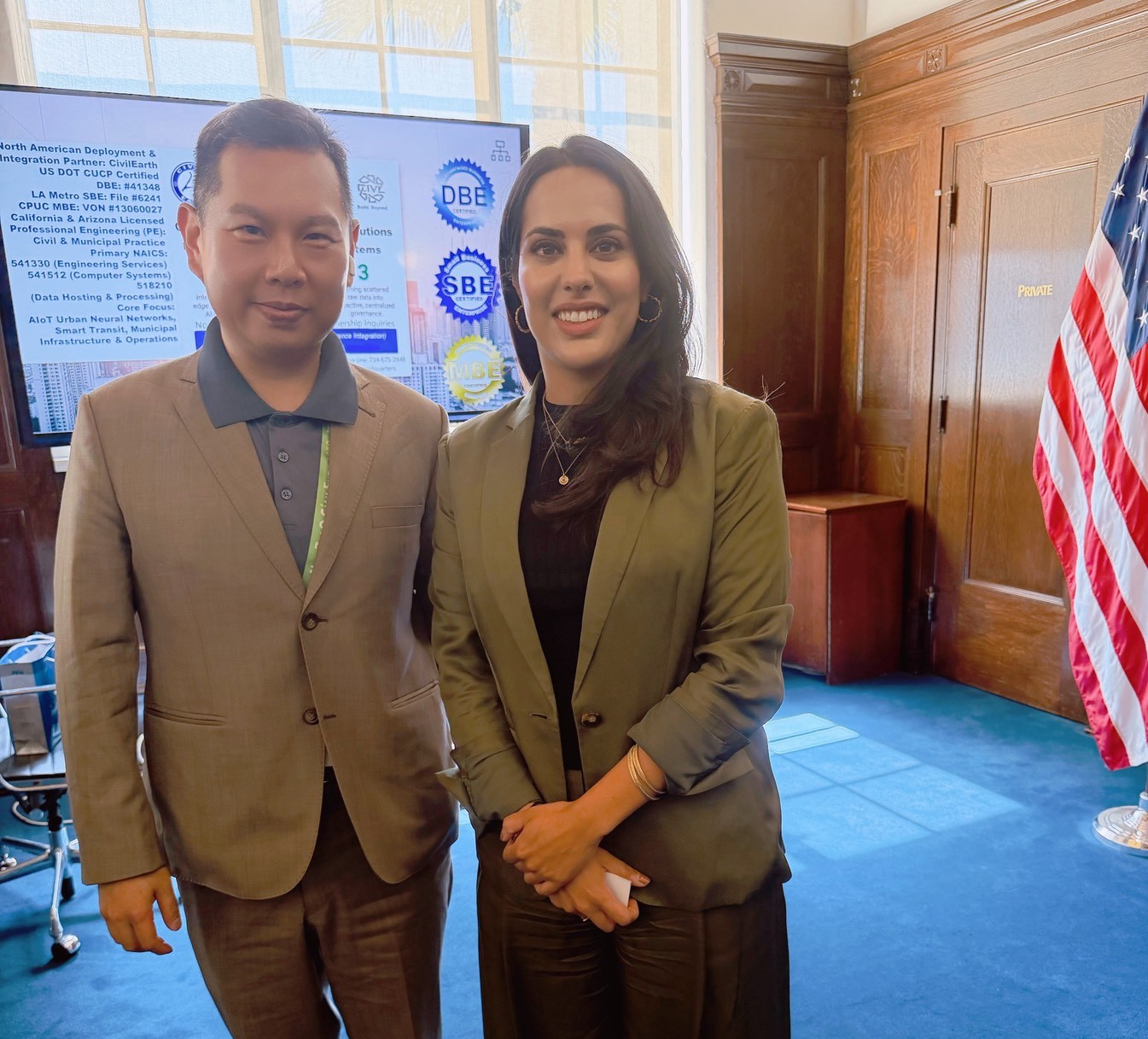
Richten Energy Founder and CEO Hsueh Wei-li (left) and Los Angeles Deputy Mayor Dilpreet Sidhu (right) exchanged views at Los Angeles City Hall on urban sustainability, LA28 and potential applications of coloured solar façades in public spaces.
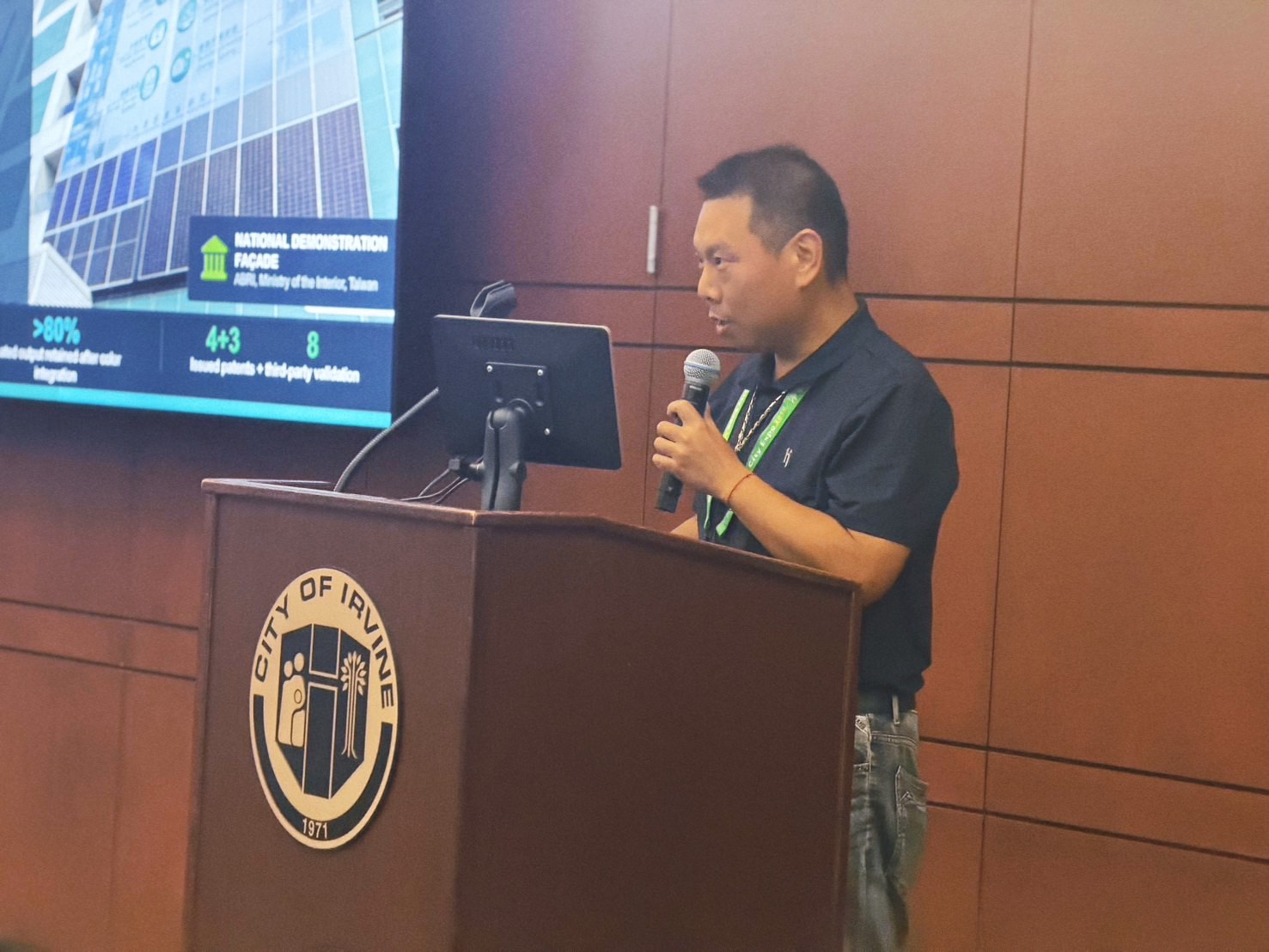
Richten Energy Founder and CEO Hsueh Wei-li presents a coloured solar panel at a Southern California smart city technology workshop, highlighting Taiwan’s public-building validation and potential applications in overseas markets.
The Standards for the Installation of Solar Photovoltaic Power Generation Equipment in Buildings, jointly issued by Taiwan’s Ministry of the Interior and Ministry of Economic Affairs, came into force on 1 August 2026. The rules require solar installations on new buildings and certain extensions or alterations above a specified size. The Ministry of the Interior has also highlighted the role of existing buildings in the net-zero transition, including the use of rooftop and façade solar, demonstration projects on public buildings and building-renewal programmes to strengthen energy self-sufficiency and resilience. Coloured solar technology can also be incorporated into façades, combining architectural aesthetics and reduced glare with power generation.
Richten Energy has already completed a demonstration of its coloured solar façade technology at the Materials Experiment Center of the Architecture and Building Research Institute, Ministry of the Interior. Using an existing public building as a test site, the project brings together coloured façade solar, energy storage and smart energy management technologies as a demonstration of how existing buildings can move towards near-zero carbon and net-zero emissions. The Institute has also stressed that real-world data gathered from such demonstration sites can help reduce the risks of adopting new technologies and encourage wider uptake across both the public and private sectors.
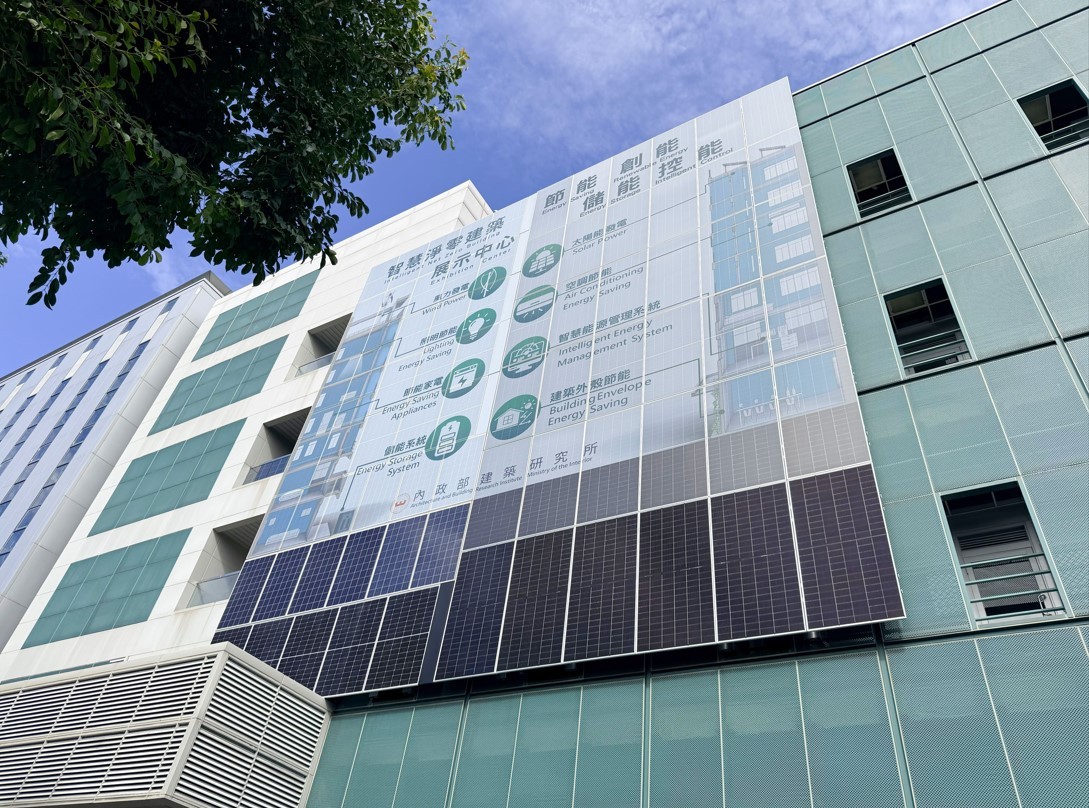
Richten Energy demonstrated its coloured solar façade technology at the Architecture and Building Research Institute, combining solar, energy storage and smart energy management in an existing public building to support market adoption and international expansion.
During the 2026 Net Zero City Expo, Taiwan’s Ministry of the Interior selected Richten Energy as one of the industry representatives at its Net Zero Vision Pavilion, showcasing how coloured solar panels can be incorporated into building façades to combine power generation with architectural design and the wider urban landscape. The validation gained through government-backed demonstration projects is increasingly providing Richten with technical credibility as it engages with cities overseas.
More recently, Richten joined a Smart City West Coast business delegation organised by the Taipei Computer Association (TCA) to Southern California, alongside representatives from Taiwanese technology companies including ASUS and Hon Hai Technology Group (Foxconn). The delegation visited Los Angeles, Irvine and a range of public-sector and innovation sites to assess demand for net-zero technologies across public buildings, parking facilities, transport hubs and urban infrastructure.
Yu-Hui Lin, Manager at TCA’s Smart City Promotion Center, said the delegation travelled across Los Angeles and Orange counties, visiting four municipal bodies and 13 industry and academic organisations. Two business-matching events attracted 71 participants, including nearly 40 representatives from municipal and public-sector organisations and 31 businesses, academic institutions and other organisations, reflecting strong interest in Taiwanese smart-city solutions and potential industry partnerships in Southern California.
The visit gave Taiwanese companies a closer understanding of local demand in areas including smart governance, infrastructure, energy management and sustainable transformation, while also laying the groundwork for deeper international city engagement and business matching at the Smart City Summit & Expo / Net Zero City Expo 2027. The event will take place at TaiNEX 2 from 16 to 19 March 2027 under the theme “AI-Driven Resilient and Sustainable Cities”. It aims to help Taiwanese companies move beyond technology showcases towards identifying market needs, validating applications and developing concrete partnerships, while expanding opportunities for Taiwanese smart-city solutions in the US market.
Following its US visit, Richten secured two opportunities at the 2026 G Camp Final Pitch: RAMEN TECH AWARD – Fukuoka Business Development and the Living Lab+ programme. G Camp, supported by the Small and Medium Enterprise and Startup Administration, will send 15 selected teams to Fukuoka for business development and participation in RAMEN TECH, with selected teams also gaining access to Living Lab+ validation and business-matching resources. Richten was selected for both the Fukuoka programme and Living Lab+ support.
Richten Energy Founder and CEO Hsueh Wei-li said a start-up’s path to international markets rarely depends on the company alone, but on continued support across policy, real-world testing, validation and market access.
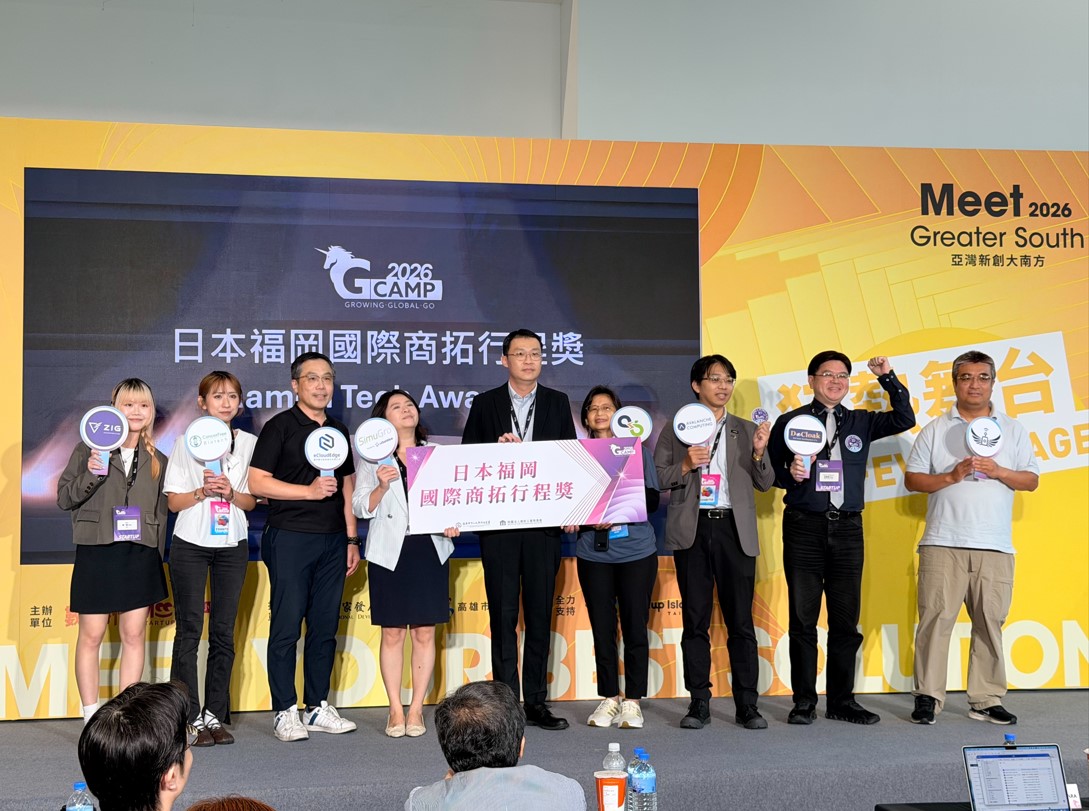
Richten Energy secured two opportunities at the 2026 G Camp Final Pitch —RAMEN TECH AWARD, Japan, and the III Living Lab+ programme — building on its validation in Taiwan to expand into the Japanese market and pursue further overseas validation.
Hsueh Wei-li said: “The real value of policy support is not simply in completing a demonstration project, but in turning that project into technical standards, partnerships and access to international markets. Without the public-building test sites provided by the Architecture and Building Research Institute, it would have been difficult to build the data needed to earn market confidence. Without the international training and business connections provided by the Small and Medium Enterprise and Startup Administration, the time and cost involved for a start-up entering overseas markets would also be considerably higher.”
Richten’s next step is to prepare its domestic validation data for international use, including English-language technical documentation, comparisons with overseas building regulations and certification requirements, financial analysis of demonstration projects, and models for local installation, operation and maintenance, and licensing.
The company also aims to combine the Ministry of the Interior’s demonstration programmes for existing public buildings, SMESA’s support for start-ups entering and validating overseas markets, and the international city network provided by the Smart City Summit & Expo. The goal is to establish a model that moves from domestic validation and standardised technical specifications to overseas city trials and replication through local partners.
Taiwan has long excelled at exporting products and manufacturing expertise. The next step is to export urban solutions that have been proven through government-backed demonstration projects. When public investment in demonstration projects can be translated into companies’ ability to compete overseas, policy support does more than help individual businesses — it creates a mechanism for scaling Taiwan’s net-zero industries into international markets.
News source: Central News Agency (CNA)
(The share action will open in a new window.)