Carbon Cost Era: Richten Energy’s
Richten Energy 204
▲As global net-zero policies, carbon pricing mechanisms and building energy regulations continue to converge, building façades are evolving from passive construction materials into urban energy assets capable of generating renewable electricity, reducing carbon emissions, supporting ESG disclosure and creating long-term operational value.

VivaTech 2026, Europe's leading technology and innovation exhibition, was held in Paris, France, from 17 to 20 June. At the event, the Taiwan Tech Arena (TTA) Pavilion showcased the collective strength of Taiwan's technology start-ups as they expanded into the European market. Participating through the TTA Pavilion, Richten Energy Co., Ltd. presented its core vision of "Power-Generating Walls", demonstrating how coloured photovoltaic façade technology can transform building exteriors into a new generation of net-zero infrastructure that integrates renewable energy generation, architectural aesthetics, low-glare design, smart monitoring and ESG data reporting.
According to information published by Taiwan Tech Arena (TTA), VivaTech 2026 serves as one of Europe's premier technology and innovation events and provides an important platform for Taiwanese start-ups to expand into international markets. Richten Energy was also selected as one of the companies in the first cohort of the TTA × VivaTech 2026 delegation, enabling the company to connect with European businesses, investors and the wider international innovation ecosystem through the TTA platform.
From the perspective of ESG and international sustainable finance, Richten Energy's presentation in Paris represented far more than a photovoltaic product. It showcased a business model designed to address one of the world's most pressing challenges—building decarbonisation. According to the United Nations Environment Programme (UNEP) Global Status Report for Buildings and Construction 2024/2025, the buildings and construction sector accounts for approximately 32% of global energy consumption and 34% of global carbon dioxide emissions, highlighting its critical role in urban net-zero strategies and corporate decarbonisation efforts.
Unlike conventional photovoltaic systems, which are typically installed on rooftops or large ground-mounted sites, Richten Energy's coloured photovoltaic façade technology focuses on an often-overlooked source of renewable energy in high-density cities—building façades. In urban environments, façades are no longer simply part of a building's construction cost; they can become distributed energy assets that are designed, invested in, monitored and managed throughout their operational lifetime.

▲Demand for this type of technology is growing rapidly across Europe. Under the European Union's Energy Performance of Buildings Directive (EPBD), all applications for new building permits submitted after 29 May 2026 must optimise the building's solar energy generation potential during the design stage, ensuring that suitable photovoltaic systems can be integrated in the future with minimal additional structural cost.
This marks a significant shift in the construction industry, where building-integrated photovoltaics are evolving from an optional feature into a core design requirement from the earliest stages of project planning.
Richten Energy's coloured photovoltaic façade solution addresses this emerging demand by integrating photovoltaic modules, façade design, low-glare performance, smart monitoring and ESG reporting into a comprehensive net-zero building solution that is readily understood and adopted by architects, property developers, public building managers and corporate headquarters.
From a carbon management perspective, Richten Energy believes that the future requires more than equipment that merely appears environmentally friendly. Businesses will increasingly need carbon reduction solutions supported by measurable, verifiable, reportable and long-term operational data.
With the European Union's Carbon Border Adjustment Mechanism (CBAM) entering its full implementation phase in 2026, international trade and global supply chains are moving into an era where carbon costs are increasingly internalised. At the same time, COP29 delivered further decisions on the implementation of Article 6 of the Paris Agreement, providing greater clarity on the authorisation, registration and environmental integrity of international carbon credit transactions.
Against this backdrop, companies seeking to purchase or claim carbon credits will face increasingly rigorous standards. The most valuable carbon assets will be those that are measurable, independently verified, free from double counting and directly linked to a company's own decarbonisation activities.
Richten Energy explained that its coloured photovoltaic façade technology can help building owners, corporate headquarters, public facilities and urban demonstration projects establish reliable energy generation and carbon reduction records, providing a robust foundation for carbon accounting, ESG reporting, renewable electricity deployment, voluntary carbon reduction project assessment and high-integrity carbon asset management.
The company also emphasised that carbon credits are not financial assets created automatically once equipment is installed. Instead, they must be supported by recognised methodologies, additionality, independent third-party verification, official registration, credit issuance and continuous long-term monitoring. This approach is consistent with international best practice. In its Beyond Value Chain Mitigation (BVCM) guidance, the Science Based Targets initiative (SBTi) stresses that companies should prioritise reducing emissions within their own value chains, while beyond-value-chain mitigation should complement—not replace or delay—their own decarbonisation efforts.
Following the opening ceremony of the Taiwan Tech Arena (TTA) Pavilion, distinguished guests from government, industry and the innovation ecosystem visited the Richten Energy stand to learn more about the company's technology. The team demonstrated how its coloured photovoltaic façade solution integrates power generation, architectural aesthetics, low-glare design, smart monitoring, energy management and ESG reporting, transforming building façades from construction costs into investable, verifiable and reportable net-zero infrastructure recognised by international markets.
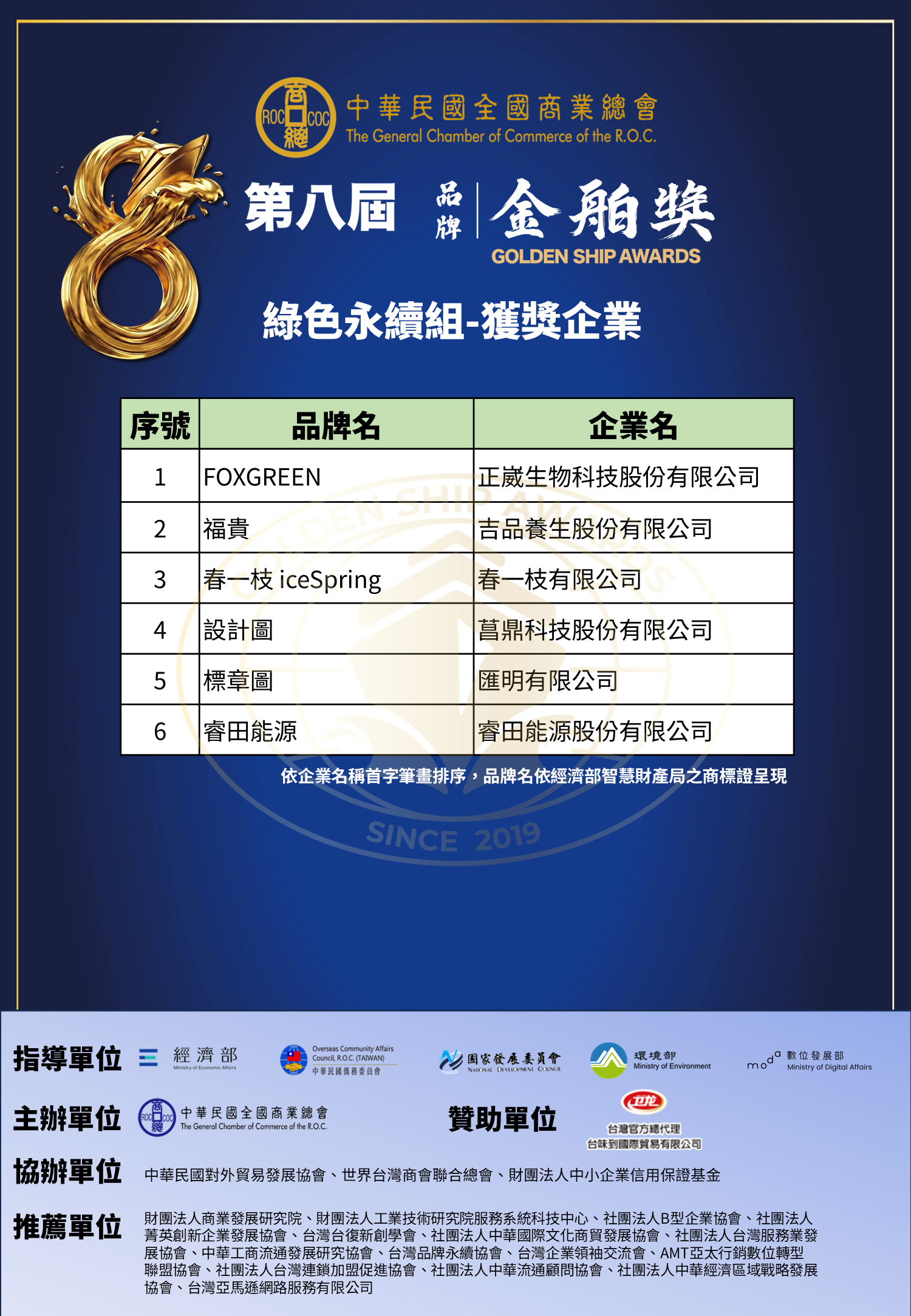
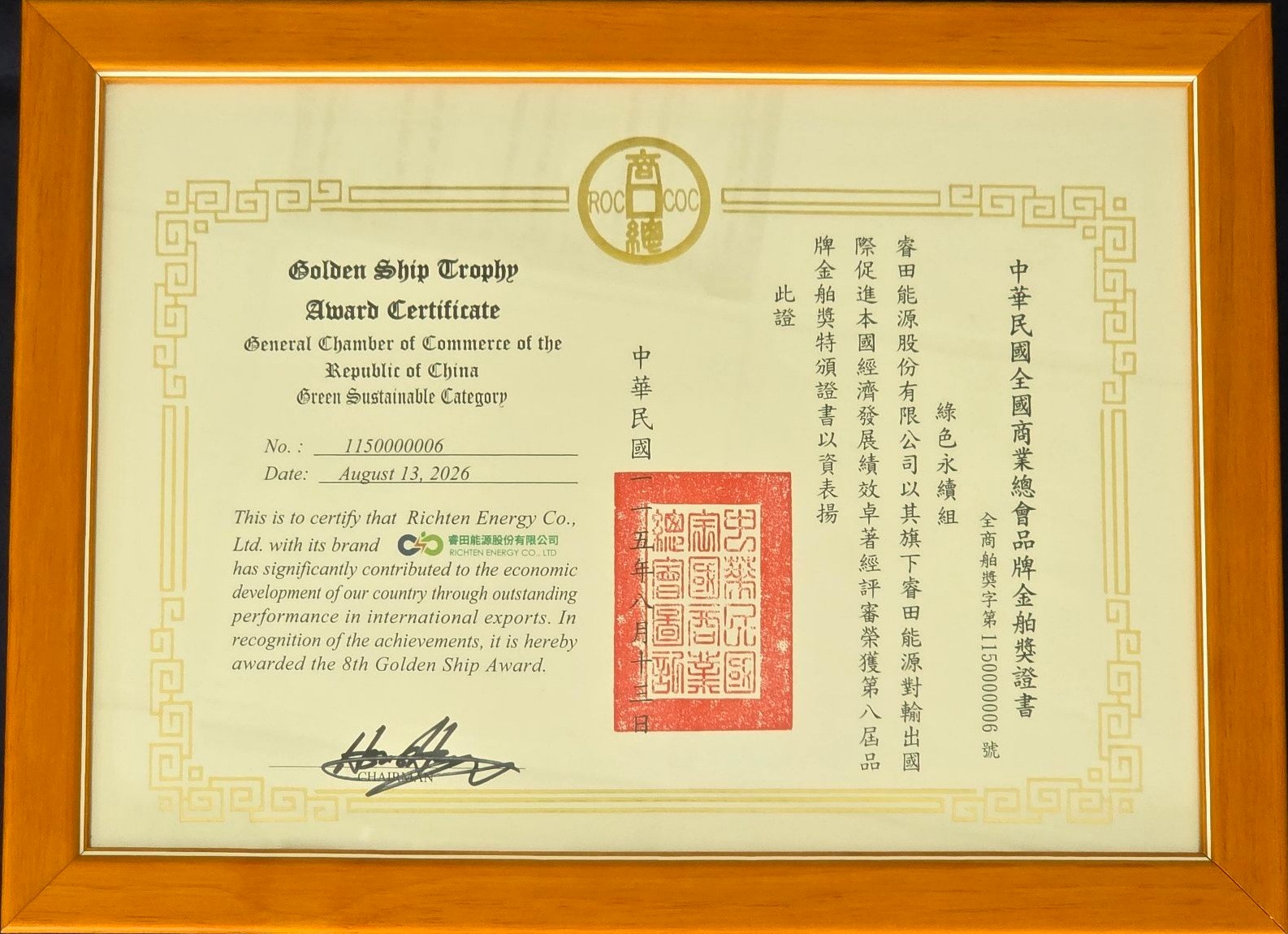
Richten Energy's participation in VivaTech 2026 also coincided with two major milestones for the company. On 18 June, according to the official website of the General Chamber of Commerce of the Republic of China, Richten Energy was announced as the recipient of the 8th Brand Golden Boat Award in the Green Sustainability category. The award recognises that the company's coloured photovoltaic façade technology delivers not only engineering value but is also emerging as a distinctive Taiwanese brand in the net-zero building sector.
In addition, Richten Energy has advanced to the Company Category Grand Final of the 10th Entrepreneurship Star Awards, organised by Economic Daily News. According to the published list of finalists, the company is one of only six finalists selected in the Company Category and will present its business during the final judging session. For a start-up, progressing through brand awards, international exhibitions and entrepreneurship competitions represents far more than increased visibility—it is a continuous test of market validation, commercial viability and the ability to communicate effectively with investors.
From the perspective of the financial and venture capital markets, Richten Energy has established a clear pathway towards international validation this year. The company first demonstrated the credibility of its technology through building projects in Taiwan, then expanded into North America through its Kansas Memorandum of Understanding, strengthened its investment narrative through entrepreneurship and capital market exchanges in New York, and is now entering the European building, energy and sustainability markets through VivaTech and the Taiwan Tech Arena Pavilion in Paris.
Public information shows that David Toland, Lieutenant Governor and Secretary of Commerce of the State of Kansas, led a state government and business delegation to Taiwan on 29 May. During the visit, the delegation toured the coloured photovoltaic façade demonstration site at the Materials Laboratory Centre of the Architecture and Building Research Institute and signed a Memorandum of Understanding with Richten Energy. Discussions covered smart net-zero buildings, clean technologies, renewable energy applications and international demonstration projects.
In recent years, Richten Energy has focused on building-integrated photovoltaics (BIPV), coloured photovoltaic façade technology and net-zero building applications. Its strategy goes far beyond simply mounting solar panels onto walls. Instead, the company integrates coloured photovoltaic coatings, façade engineering, architectural identity, low-glare design, smart monitoring, asset management and ESG communication into a comprehensive building solution.
The company has publicly explained that its coloured photovoltaic façade system combines renewable energy generation, façade integration, architectural design, low-glare performance and building refurbishment requirements, with the objective of transforming building façades from cost-bearing exterior surfaces into energy assets that deliver electricity generation, energy efficiency, architectural value and ESG communication benefits.
As part of its international expansion strategy, Richten Energy has also strengthened its engagement with the U.S. market through programmes organised by the Asia Innovation Hub (AIH) and the Nasdaq Entrepreneurial Center, gaining further insight into market entry strategies, capital planning, IPO readiness, strategic partnerships and international innovation networks.
As a result, Richten Energy's international story is no longer simply about exporting a product. It is about aligning technology, real-world applications, public policy, investment strategy and carbon management with the needs of overseas markets. For both Europe and North America, the ability to convert building decarbonisation into verifiable data, long-term operational projects and investment-ready business models will be critical to scaling net-zero building technologies.
Mr. Weili, Founder and CEO of Richten Energy, said:
"Through TTA, Taiwanese start-ups are not entering Paris individually—we are entering the international market together as Team Taiwan. For Richten Energy, VivaTech provides an important opportunity to position Taiwan's net-zero building technology within the context of European cities, architecture, energy systems and capital markets. Building façades have traditionally been viewed as a cost, but in the future they should be recognised as energy assets. Through the TTA platform, we hope to demonstrate that Taiwan is capable not only of manufacturing photovoltaic products, but also of delivering complete net-zero building solutions."
Mr. Weili added:
"The world is entering an era in which carbon has value, data carries responsibility and carbon reduction must be supported by evidence. The true value of coloured photovoltaic façades lies not only in generating electricity, but also in helping building owners and businesses establish carbon reduction data that can be reported, independently verified and managed over the long term. Carbon credits and carbon assets cannot be built on slogans—they require real projects, reliable data, recognised methodologies and third-party verification. Richten Energy's goal is to help transform buildings from energy consumers into active contributors to urban net-zero strategies and corporate ESG performance."
Richten Energy stated that it will continue to leverage the Taiwan Tech Arena (TTA) Pavilion as a platform to engage with European architects, developers, public building authorities, energy solution providers, corporate headquarters, ESG consultants and net-zero city initiatives, while seeking demonstration projects, strategic partnerships, distribution channels and investment opportunities.
Guided by its vision of "Building as an Energy Asset", the company will continue integrating coloured photovoltaic façade technology, smart energy management, building energy efficiency improvements, carbon accounting data connectivity and ESG reporting into scalable, investable and operationally sustainable net-zero building solutions.
From Taiwan to Kansas, New York and now Paris, Richten Energy is building a clear international narrative around its vision of "Power-Generating Walls." This represents far more than the overseas display of an innovative photovoltaic product. It demonstrates how a Taiwanese start-up, supported by Taiwan Tech Arena (TTA), the Brand Golden Boat Awards, the Entrepreneurship Star Awards and international entrepreneurship networks, is bringing Taiwan's proven technology, industrial integration capabilities and net-zero urban solutions to the global market.
As building façades evolve into assets capable of generating renewable energy, reducing carbon emissions, supporting ESG disclosure and attracting investment, every wall has the potential to become part of the next generation of net-zero urban infrastructure.
(The share action will open in a new window.)