Beyond Rooftops: Richten Energy Wins Entrepreneurship Star Award for Coloured Solar PV Innovation
Richten Energy 248
Richten Energy Targets Net-Zero Building Opportunities Through Coloured Solar PV and Aesthetic BIPV Innovation
With a focus on transforming building façades into renewable energy assets, enhancing corporate ESG performance, and accelerating the transition to net-zero buildings, Richten Energy is creating new opportunities at the intersection of coloured solar PV, Building-Integrated Photovoltaics (BIPV), and sustainable urban development.
As investment interest increasingly shifts from software-driven growth towards climate technology, energy resilience, and sustainable infrastructure, Taiwan's net-zero building sector is emerging as an area of growing opportunity. At the finals of the 10th Entrepreneurship Star Awards organised by the Economic Daily News, Richten Energy was honoured with an Excellence Award in the Corporate Category.
Leveraging its proprietary coloured solar PV technology, the company is expanding solar energy applications beyond traditional rooftops and into building façades. Its vision is to transform urban building surfaces into energy-generating assets that create environmental, architectural, and economic value whilst supporting carbon reduction and ESG objectives.
Richten Energy believes that the façades of tomorrow's cities should not merely enclose buildings — they should generate clean energy, enhance architectural identity, and contribute to a more sustainable urban future.
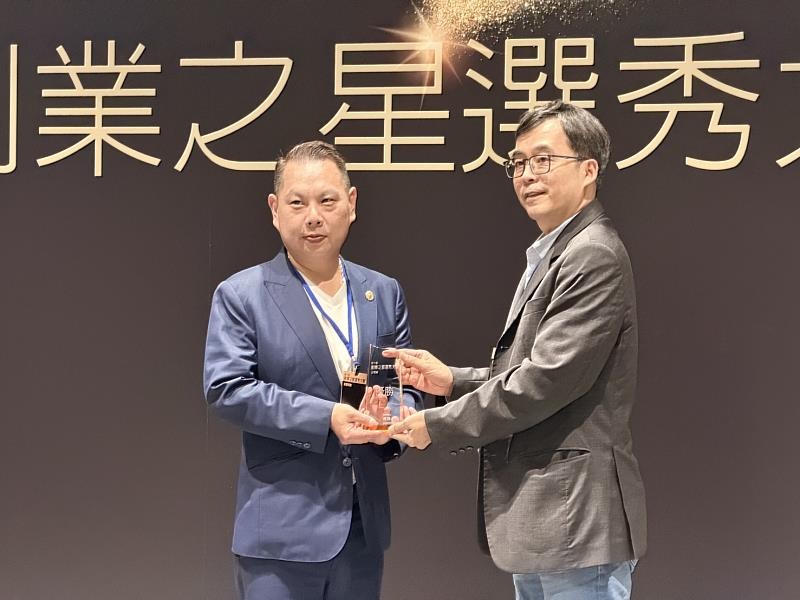 Richten Energy received the Excellence Award in the Corporate Category at the 10th Entrepreneurship
Star Awards for its contribution to coloured solar PV and net-zero building innovation
Richten Energy received the Excellence Award in the Corporate Category at the 10th Entrepreneurship
Star Awards for its contribution to coloured solar PV and net-zero building innovation
Unlike conventional solar PV systems, which are primarily installed on rooftops or ground-mounted sites, Richten Energy sees significant untapped potential in the vast façade space found throughout modern cities. In high-density urban environments, rooftop space is often limited, ownership structures can be complex, and installation conditions vary widely. As a result, many corporate headquarters, office buildings, public facilities, educational campuses, hospitals, hotels, and large-scale developments face challenges in finding solutions that can simultaneously address decarbonisation goals, architectural requirements, engineering considerations, regulatory compliance, and ESG objectives.
Through its coloured solar façade systems, Richten Energy aims to transform building walls from passive architectural elements into multifunctional assets that generate renewable energy, enhance brand identity, and support carbon management strategies.
According to Weilie Chen, Founder and CEO of Richten Energy, the significance of this award extends beyond recognition at a start-up competition. It represents growing market recognition for the concept of transforming building façades into renewable energy assets.
“We are not simply mounting solar panels on walls,” said Chen. “Our goal is to transform building façades from a cost centre into an energy-generating asset. When façades can produce clean electricity, reduce carbon emissions, support architectural design, and contribute to ESG reporting, buildings become more than energy consumers — they become part of an organisation’s net-zero strategy and long-term competitiveness.”
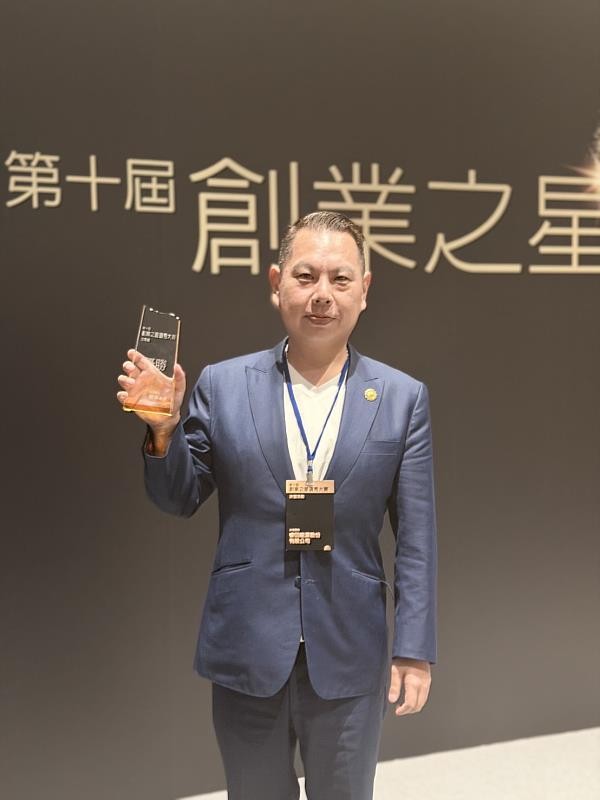 Richten Energy Founder and CEO, Weilie Chen, with the Excellence Award in
the Corporate Category, recognising innovation in energy-generating building façades.
Richten Energy Founder and CEO, Weilie Chen, with the Excellence Award in
the Corporate Category, recognising innovation in energy-generating building façades.
From an investment perspective, Richten Energy’s value lies not in a single product, but in its ability to bridge climate technology, building technology, distributed energy, ESG services, and sustainable finance. Its coloured solar PV technology offers visual customisation, architectural integration, and renewable energy generation within a single solution, helping overcome one of the key barriers to wider solar adoption in urban environments: aesthetics.
Beyond power generation, the company sees significant potential in integrating energy production data, energy-saving performance, carbon reduction metrics, and long-term operation and maintenance services. Together, these capabilities can provide the foundation for ESG reporting, green building upgrades, and sustainability assessments required by corporations, investors, and financial institutions.
For venture capital and strategic investors, Richten Energy is addressing more than individual construction projects. It is developing a scalable market model that can be replicated across a wide range of applications, including corporate headquarters, industrial facilities, office buildings, public infrastructure, educational campuses, healthcare facilities, hotels, transport hubs, urban regeneration projects, and high-density cities around the world.
This creates opportunities for the company to expand beyond project-based revenues into higher-value activities such as system integration, technology licensing, operation and maintenance services, ESG data solutions, and international demonstration projects.
Importantly, Richten Energy does not position itself solely as an energy equipment provider. Instead, it aims to serve as a bridge between the building sector and the energy transition. Its business model brings together architectural design, solar PV systems, engineering delivery, energy performance verification, ESG reporting support, and long-term asset management. For corporate clients, this is not simply the procurement of a solar system; it is the adoption of a comprehensive net-zero building solution that can be understood and evaluated by boards of directors, sustainability leaders, finance teams, and investors alike.
According to Founder and CEO Weilie Chen, Taiwan possesses a unique combination of strengths in electronics manufacturing, construction engineering, financial services, and ESG-related expertise, making it an ideal base for the development of coloured solar PV and building-integrated photovoltaic solutions.
Looking ahead, the company plans to strengthen collaboration with property developers, construction firms, financial institutions, corporate ESG teams, and public-sector stakeholders. Drawing on the founding team's long-standing involvement in international sustainability initiatives, SDG programmes, and global net-zero partnerships, Richten Energy aims to bring Taiwan’s expertise in sustainable building innovation to cities around the world.
“We want to combine Taiwan’s engineering capability, design expertise, and sustainability leadership to create net-zero building solutions that can compete on the global stage,” said Chen. “Net zero should not remain a commitment on paper. It must ultimately be reflected in buildings, energy systems, and financial outcomes. Our goal is to create façades that generate not only clean energy, but also carbon value, economic value, and brand value.”
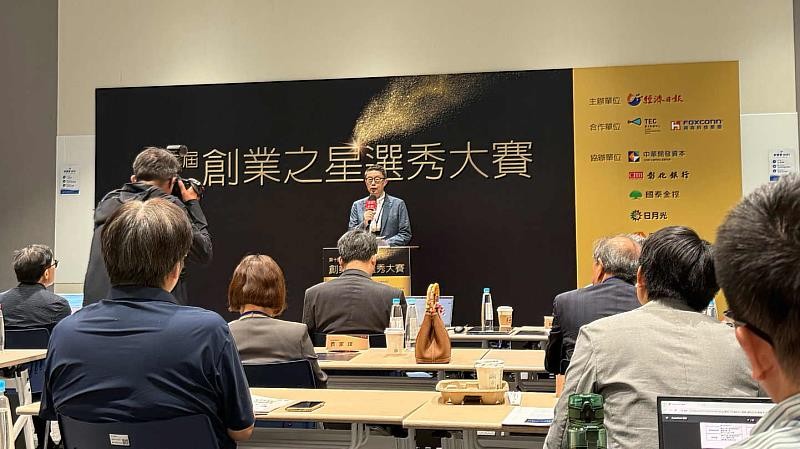
The 10th Entrepreneurship Star Awards gathered representatives from industry, finance, venture capital,
and the start-up ecosystem.
The Entrepreneurship Star Awards brought together representatives from industry, finance, venture capital, and the innovation ecosystem, providing a highly concentrated form of market validation for emerging companies. Richten Energy’s recognition in the Corporate Category reflects the growing interest in coloured solar PV and façade-based renewable energy solutions, not only as product innovations, but also as a new way of rethinking how cities generate and manage energy.
As pressure continues to grow around corporate net-zero commitments, building decarbonisation, renewable energy adoption, and ESG reporting requirements, investors are increasingly seeking climate technology companies that can demonstrate technical feasibility, scalable deployment models, and clear commercial potential. Richten Energy’s award provides a strong foundation for future demonstration projects, strategic partnerships, and increased visibility within the investment community.
More importantly, it raises a broader question for the future of sustainable cities: can building façades become the next generation of urban renewable energy assets? As the market continues to evolve, this is a development that investors, policymakers, and industry leaders will be watching closely.
(The share action will open in a new window.)