Mapping Taiwan’s Solar Power Landscape Central and Southern Taiwan Emerge as the Industry’s Key Development Hubs
Richten Energy 51
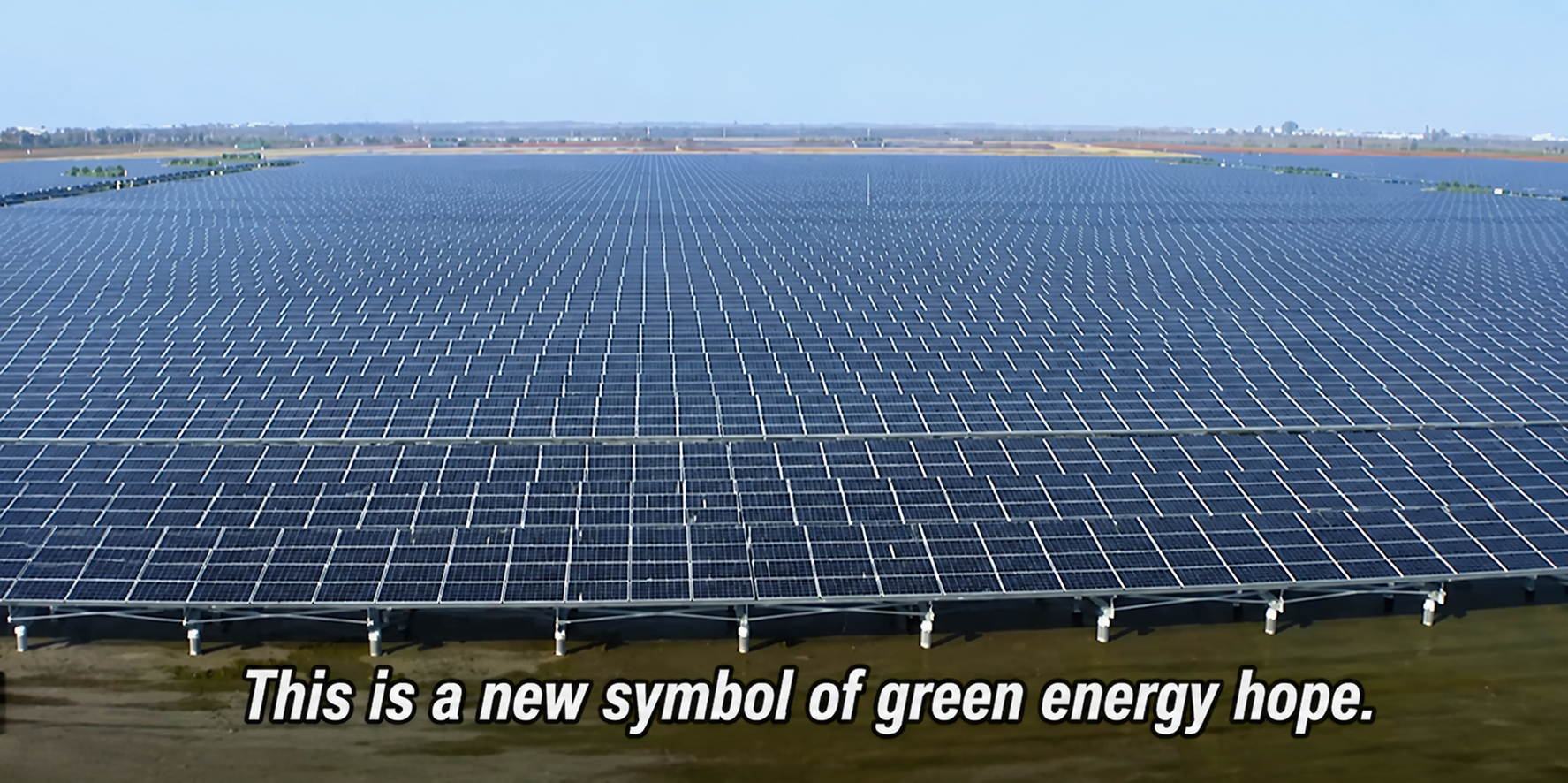
Taiwan’s solar energy industry continues to expand, with the photovoltaic sector’s output value exceeding NT$213.6 billion in 2023 and its total output value projected to surpass NT$300 billion in 2025.
Tainan remains the country’s leading city for solar power generation, while all five of Taiwan’s top solar-generating cities and counties are located in central and southern Taiwan. Experts say the region’s extensive plains and favourable sunshine conditions have made it a major hub for solar energy development.
Looking ahead, however, industry demand is shifting beyond simply generating electricity towards reducing energy consumption as well. Against this backdrop, Heat Insulation Solar Glass (HISG) has emerged as a promising new technology, with its annual market output value conservatively estimated at NT$700 million.
Vast expanses of solar panels have become a visible symbol of Taiwan’s growing green energy ambitions. As the transition towards renewable energy gathers pace, solar power installations have become an increasingly common sight across cities and counties throughout Taiwan.
Junping said: “Where I am standing now used to be a fish farm. In recent years, energy companies have moved into the area in increasing numbers, and you can see extensive solar panel installations covering a large area. Tainan also has many ‘fishery and electricity symbiosis’ projects, which have helped make the city one of Taiwan’s key bases for solar energy development.”
Taiwan’s photovoltaic industry recorded an output value of NT$213.6 billion in 2023. According to the latest data on the country’s solar energy landscape, Tainan City ranks first, followed by Changhua County, Yunlin County, Pingtung County and Kaohsiung City. All five are located in central and southern Taiwan.
Based on downstream industry output, these five cities and counties together account for NT$63.1 billion in output value, representing 29.5 per cent of the total.
Experts say the concentration of solar development in central and southern Taiwan is no coincidence. While the region has become the country’s main solar development zone, the industry’s expansion has also exposed certain shortcomings.
Experts point to two main factors. Solar projects in central and southern Taiwan tend to be large in scale and potentially highly profitable, with individual projects worth more than NT$100 million commonplace. At the same time, the solar supply chain is highly complex, creating potential gaps across its upstream, midstream and downstream segments. Yet these challenges are also helping to drive the industry’s transformation.
Experts say the next stage of that transformation will require a shift from energy generation to energy conservation, allowing buildings to generate electricity for their own use.
This also challenges the conventional assumption that solar power generation must depend on large areas of land. A new generation of Heat Insulation Solar Glass can generate electricity while also reducing energy consumption, with particularly significant thermal insulation benefits.
Reporter Lu Yi-chuan compared the performance of two experimental buildings.
In addition to generating electricity, the solar glass provides thermal insulation, helping reduce electricity consumption from air-conditioning and other building systems. Its annual output value is conservatively estimated to exceed NT$700 million.
The technology has already attracted interest from companies and facilities including McDonald’s, TSMC and Taipei Songshan Airport, and is now moving onto the international stage, with ongoing trials at an airport in Dubai. McDonald’s Taiwan, for example, confirms that its green-building restaurant has adopted patented Taiwanese solar energy-saving glass combining light transmission, thermal insulation and electricity generation.
As Taiwan continues to innovate along its green energy transition, such developments could provide another opportunity for the country’s solar technologies to gain international recognition.
Source: CTS News
(The share action will open in a new window.)