No Roof Needed: Europe`s Balconies Are Becoming Mini Solar Power Plants, with Payback in Just Three Years
Richten Energy 98
Balcony solar has surged in popularity in Germany in recent years, finally giving people who previously had no access to solar power the opportunity to generate electricity from their own balconies. These plug-in systems are easy to install and relatively inexpensive, making them particularly suitable for tenants and apartment dwellers. With governments across Europe introducing subsidies and simplifying registration procedures, the balcony solar market is growing rapidly, enabling more people to take part in the energy transition.
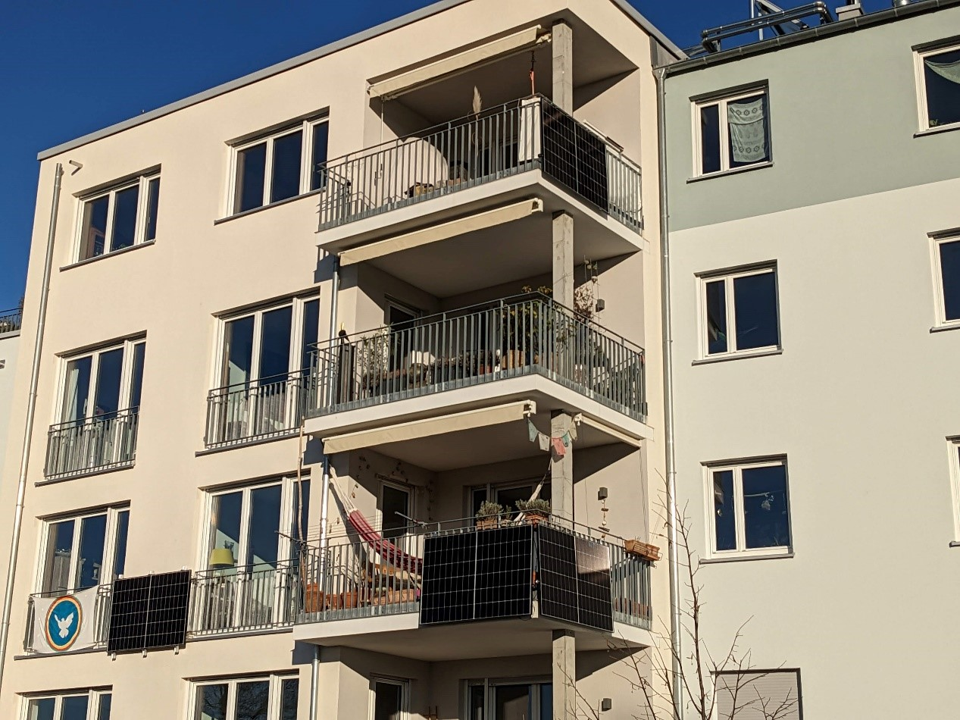
In Germany, balconies are no longer simply places for drying clothes or growing plants. Increasingly, they are being transformed into miniature power plants. Solar balconies, also known as balcony power plants, are gaining popularity across Europe and have become particularly widespread in Germany. But what is driving the appeal of these low-cost, plug-and-play systems?
What is balcony solar?
According to Germany’s international broadcaster Deutsche Welle (DW), balcony solar essentially involves installing small solar panels on a balcony or terrace. Thanks to their simple plug-in design, the systems can be connected directly to a standard household socket and generally do not require professional installation.
A typical system consists of one to three photovoltaic (PV) modules that generate direct-current (DC) electricity. This electricity is fed into an inverter, which converts it into alternating current (AC) compatible with the electricity grid.
Compared with conventional rooftop solar installations, balcony solar systems are smaller and more affordable. The fact that they can be installed without specialist assistance also makes them particularly convenient for tenants and households with limited budgets.
Why is balcony solar growing so rapidly in Germany?
According to Euronews, electricity prices in Germany rose sharply following Russia’s full-scale invasion of Ukraine in 2022, prompting households to seek ways to reduce their electricity costs. Balcony solar quickly emerged as an attractive option.
Katharina Mueller installed solar panels in 2024. While generating her own solar power helps her save some money, she said the broader concept was what appealed to her most: once the equipment is installed, she can make use of an existing resource and benefit from it herself — an idea she found difficult to resist.
Germany’s balcony solar market has expanded rapidly. Registrations of solar panels in the second quarter of 2024 were more than 50 per cent higher than in the strongest quarter of 2023. Karolina Attspodina, co-founder of start-up We.Do.Solar, which specialises in balcony solar panels, sees apartment buildings as an ideal setting for renewable energy. The company has also performed well in France, the Netherlands, Spain and Portugal, but Germany remains its strongest market.
According to Euronews, government support has also played an important role in expanding the market. Germany began encouraging household solar installations through feed-in tariffs in the early 2000s and has more recently introduced a series of measures to simplify the registration of balcony solar systems and provide subsidies at regional level.
The State of Berlin, for example, has offered subsidies of up to €500 — potentially covering around half the cost of a system.
Jan Osenberg, then Policy Advisor at SolarPower Europe, estimated that a balcony solar system could pay for itself in around three years. With a lifespan of approximately 20 years, he described it as a straightforward investment for households.
Who is balcony solar suitable for?
Balcony solar is particularly well suited to people who cannot install conventional solar panels on a roof, including apartment residents who are unable to modify the building’s rooftop.
Because balcony systems have relatively little impact on the building structure and can be removed when required, they are also particularly convenient for tenants who move frequently. They can offer an alternative for properties subject to heritage protection requirements or buildings whose roof structures are unsuitable for conventional solar installations.
According to DW, although balcony solar systems are relatively small, their generating potential should not be underestimated. Even in Germany, where sunshine levels are comparatively modest, a 400-watt module installed on a south-facing balcony can generate around 260 kWh of electricity a year. An east- or west-facing installation can still produce approximately 190 kWh annually.
A balcony solar system alone cannot meet an entire household’s electricity needs. A four-person household in Germany consumes around 4,000 kWh of electricity a year. Nevertheless, balcony solar can provide supplementary power and help reduce electricity bills.
The electricity generated can be sufficient to run smaller household appliances and devices, such as a router, small refrigerator or laptop. During spring and summer, a 400-watt south-facing module can generate up to around 320 watts of power. Even on cloudy days, it can still produce roughly 50 watts.
How are other European countries approaching balcony solar?
According to Euronews, Germany is not alone in promoting balcony solar. Countries including Austria, France, Italy, Poland and Luxembourg also encourage households to install balcony solar systems.
However, not all European countries have embraced balcony solar to the same extent. Belgium and Hungary, for example, still prohibit balcony solar systems, mainly because of concerns that unregistered power generation systems could undermine grid stability.
By making small-scale solar generation simpler and more accessible, balcony solar is enabling a much broader section of the public to participate directly in the energy transition.
As Osenberg has observed, rooftop solar can have an empowering effect. People with balcony solar systems often begin tracking their own electricity consumption, giving them a sense that they are at the forefront of the energy transition.
Whether Europe’s balcony power boom will continue to gather momentum remains to be seen.
Source: Business Today
(The share action will open in a new window.)