Decarbonizing existing buildings through colored PV innovation
Richten Energy 215
March 4 marks the World Engineering Day for Sustainable Development, an initiative led by UNESCO to highlight the role of engineering in addressing climate change and urban transformation. This year’s theme emphasizes innovation and digitalization as key drivers of a sustainable future.
Richten Energy highlights a more practical perspective: sustainability must go beyond concepts and become deliverable, measurable, and financially viable engineering systems.
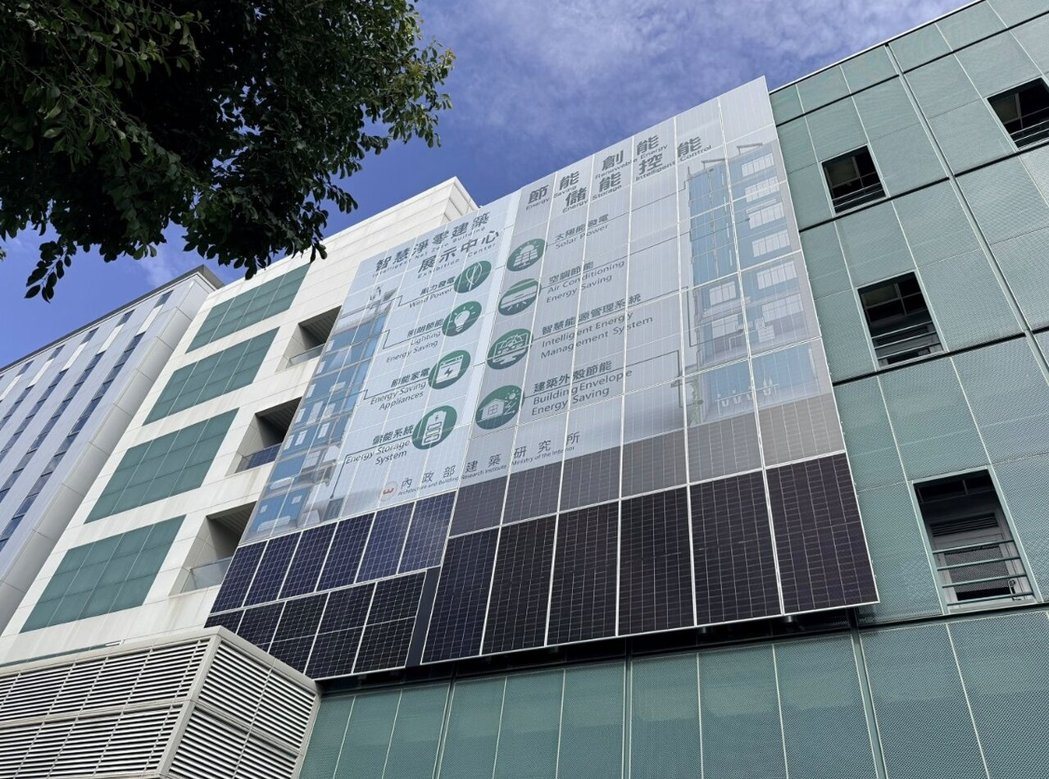
Demonstration façade at the Architecture and Building Research Institute (ABRI) Materials Testing Center. Selected modules are repurposed from retired PV panels through testing and grading, showcasing how building façades can generate energy, reduce carbon emissions, and contribute to urban design—demonstrating a model for energy asset integration.
Existing buildings as a key to urban decarbonization
As renewable energy adoption accelerates, new regulations are gradually making solar installations a standard requirement for new developments. However, Richten Energy emphasizes that meaningful urban decarbonization cannot rely solely on new buildings.
Instead, the focus must shift to the much larger stock of existing buildings, particularly aging structures undergoing renovation and extension. These buildings represent a significant opportunity to integrate renewable energy while improving long-term performance and usability.
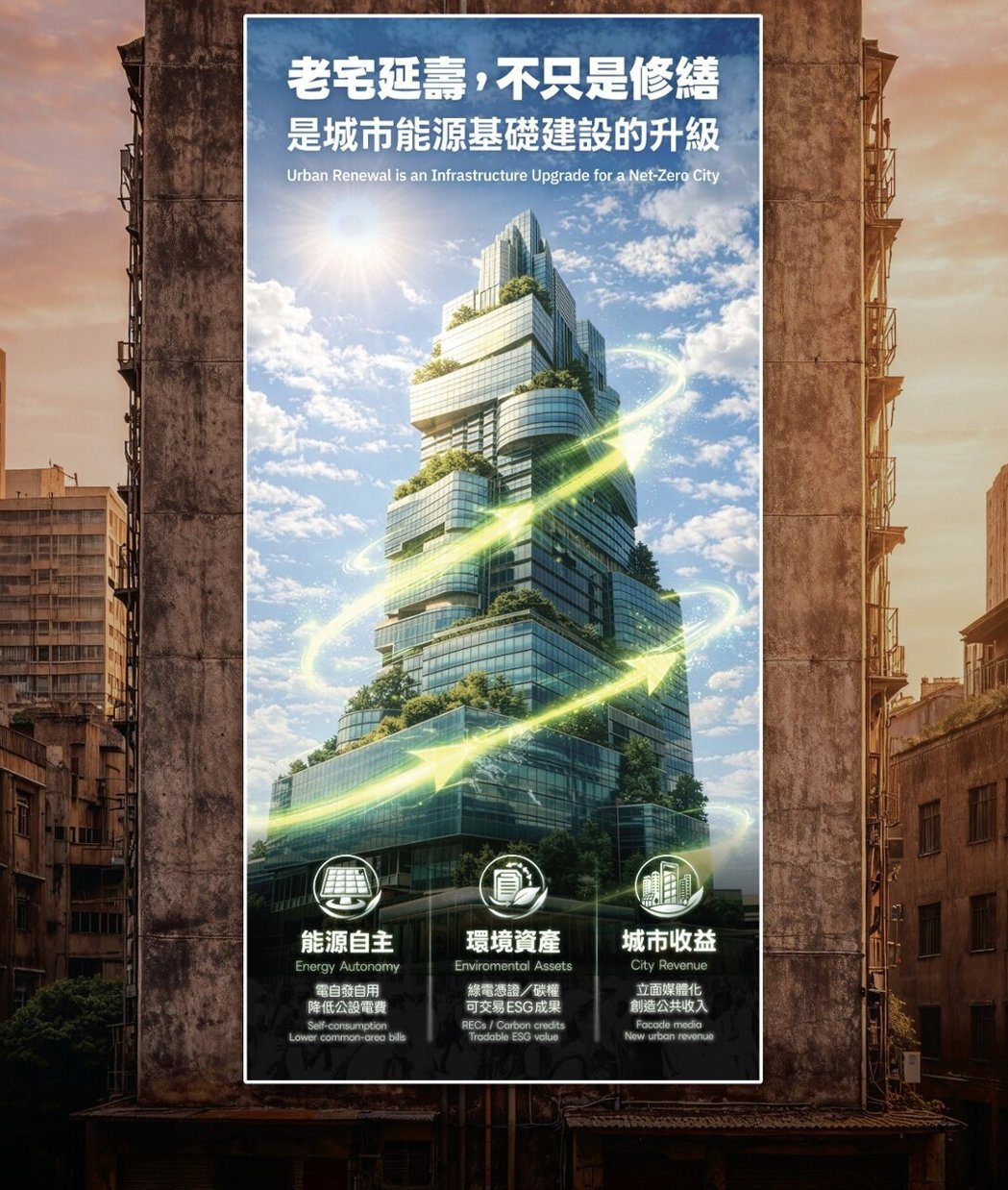
Concept illustration of a colored PV façade. Building surfaces are transformed into renewable energy interfaces, enabling electricity generation, carbon reduction, and long-term value creation as part of building retrofit strategies.
Key challenges in building retrofits
Richten Energy identifies three common challenges in upgrading older buildings:
Limited governance structures
Many buildings lack long-term management mechanisms for shared infrastructureOperational cost pressure
Ongoing maintenance and energy use create additional financial burdenFinancing constraints
Projects require predictable and measurable cash flow to support long-term investment
Colored PV façades as an integrated solution
To address these challenges, Richten Energy introduces a colored PV façade solution that transforms building surfaces into energy-generating interfaces.
Using colored PV coating technology, façades can be converted into modular and adaptable energy systems, enabling buildings to generate electricity while maintaining visual integration with the surrounding environment.
1. Customizable and adaptable building surfaces
Colored PV systems enable façades to function as flexible urban interfaces:
Customizable visual design aligned with branding or community identity
Replaceable coating layers to reduce long-term aesthetic depreciation
Potential integration with sponsorship or commercial collaboration models
2. Expanding energy generation beyond rooftops
Compared to rooftop installations, façade-based systems provide additional surface area for energy generation. Demonstration projects show how combining colored PV systems, energy storage, and smart energy management can support real-world applications in existing buildings.
This approach not only increases energy generation capacity but also reduces glare and improves overall visual integration.
3. Circular reuse of PV modules
As the global solar industry matures, module end-of-life management has become an important issue. Many retired PV modules still retain usable performance.
Richten Energy applies a testing, grading, and remanufacturing process to repurpose these modules into façade applications, extending their lifecycle while supporting circular economy principles.
Current demonstration projects show annual generation of approximately 22,000 kWh and carbon reduction of around 10.5 tons of CO₂e, with further expansion underway.
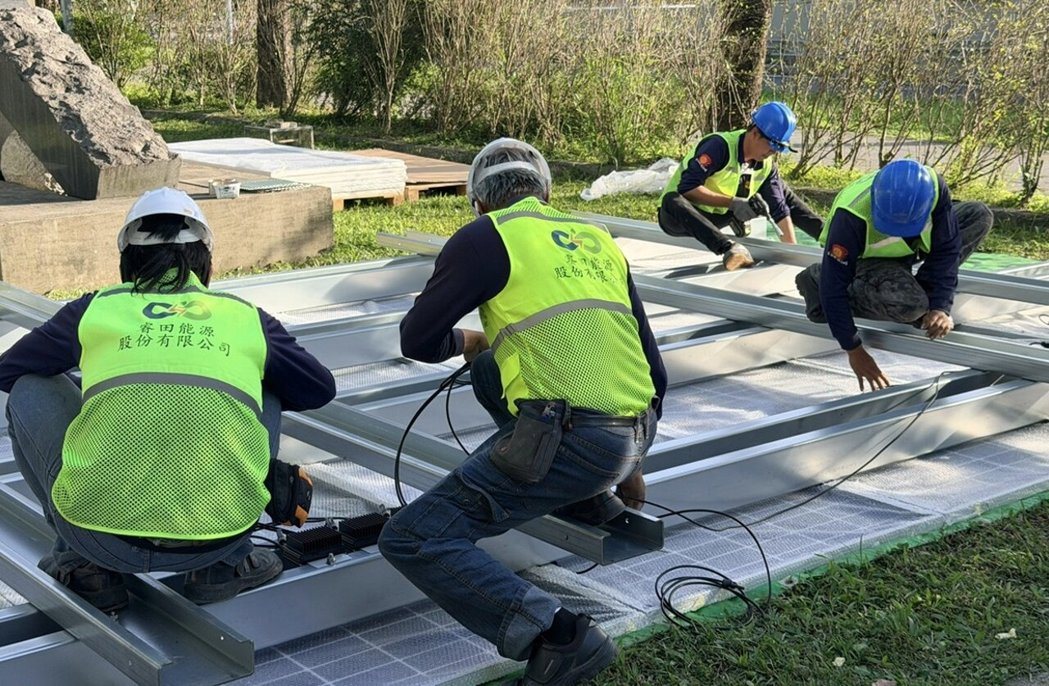
Installation of modular colored PV façade systems by the Richten Energy engineering team. The modular structure and coating technology enable integration into existing buildings without major structural changes, providing a practical solution for building renewal and urban decarbonization.
Turning sustainability into measurable assets
Richten Energy emphasizes that successful building retrofits must align engineering design with asset value:
Engineering: modular, replaceable, and maintainable systems
Data: measurable energy generation and carbon reduction performance
Finance: predictable revenue streams from energy generation and façade utilization
This integrated approach enables renewable energy systems to support long-term operation and investment evaluation, transforming building upgrades into sustainable and financially viable assets.
Advancing practical net-zero solutions
World Engineering Day highlights the importance of engineering in driving sustainable development. Richten Energy continues to develop colored PV solutions that integrate energy generation, carbon reduction, and system resilience into practical applications.
By transforming building façades into renewable energy assets, the company aims to accelerate the transition toward scalable, measurable, and investable net-zero solutions.
(The share action will open in a new window.)